
Best Litter Box for Homes with Dogs and Cats
The short answer: The best litter box for a home with both dogs and cats has walls tall enough that a dog cannot reach inside, a design that gives cats a clear entry and exit without creating a trap, and a material that stays hygienic under the heavier use that comes with a multi-pet household. The Halo Extra Tall with 16-inch walls stops access for most small to medium dogs without requiring a top-entry design that many cats dislike.
If you share your home with both dogs and cats, you already know the problem. Dogs are attracted to cat waste with a persistence that no amount of redirection seems to fix. It is one of the most searched litter box problems among multi-pet owners, and the solutions most people try first, placing the box in another room, buying a covered box, moving it to a higher surface, almost never work long term.
This guide covers what actually works, why wall height is the most underrated spec in this situation, and how to choose a litter box that keeps dogs out without making your cat's life harder.
Why Dogs Go After the Litter Box
Understanding the behavior makes the solution clearer.
Cat waste contains undigested protein, fat, and other nutrients that dogs find genuinely appealing from a nutritional standpoint. It is not a behavioral problem or a sign something is wrong with your dog. It is a hardwired scavenging instinct that training can reduce but rarely eliminates entirely in a multi-pet home where the cat box is accessible.
The term for this behavior is coprophagia. It is extremely common in dogs living with cats. Beyond being unpleasant, it creates a hygiene problem: a dog that accesses the litter box regularly tracks bacteria through the home and can in rare cases ingest parasites present in cat feces.
The only reliable long-term solution is making the litter box physically inaccessible to the dog, not dependent on the dog's compliance.
Why Most Solutions Don't Work
Baby gates: Most dogs can jump over or push through standard baby gates. Gates also create access problems for senior cats or cats with mobility issues.
Covered litter boxes: Standard covered boxes with a small hood opening stop large dogs but not small or medium ones. They also trap odor, which cats find aversive and which can cause box avoidance. Many cats simply refuse covered boxes.
Top-entry boxes: These work well for agile adult cats but create real problems for kittens, senior cats, and cats with arthritis or joint issues who cannot easily jump in and out. In a multi-cat household with cats of different ages, a top-entry box often excludes the cats that need it most.
Moving the box to another room: Dogs are persistent. Unless the room is permanently inaccessible to the dog, this is a temporary fix at best.
Furniture-style litter box enclosures: These work but only if the entry hole is small enough to exclude your specific dog. Most enclosures are designed for aesthetics rather than dog-proofing and the entry opening ends up being large enough for a determined small dog to push through.
What Actually Works: Litter Box Wall Height
The most effective physical barrier that doesn't compromise cat access or hygiene is simply taller walls.
A dog accesses a litter box by reaching over the side or putting their head in over the rim. Standard litter box walls sit at 5 to 8 inches. A dog of almost any size can reach over that without difficulty.
When litter box walls reach 12 to 16 inches, the geometry changes. A small to medium dog cannot reach over the rim without climbing into the box entirely, which most dogs will not do, particularly if the box is positioned with the entry facing away from the dog's usual approach direction.
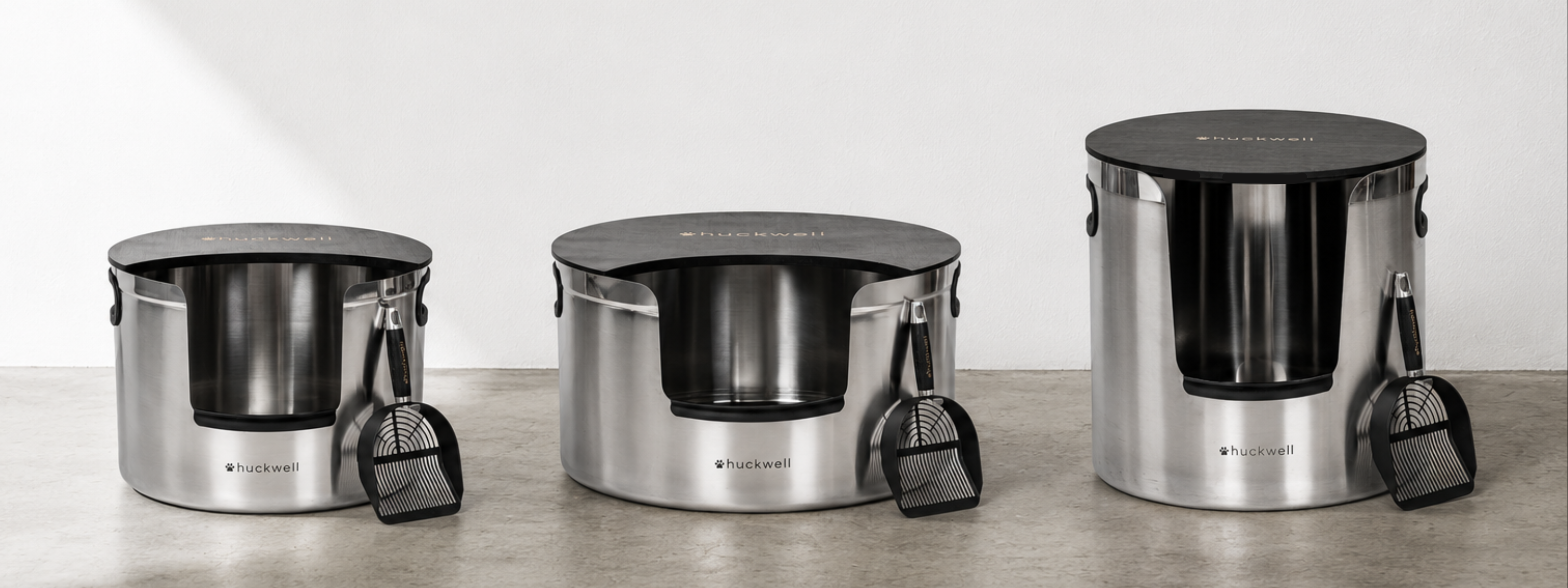
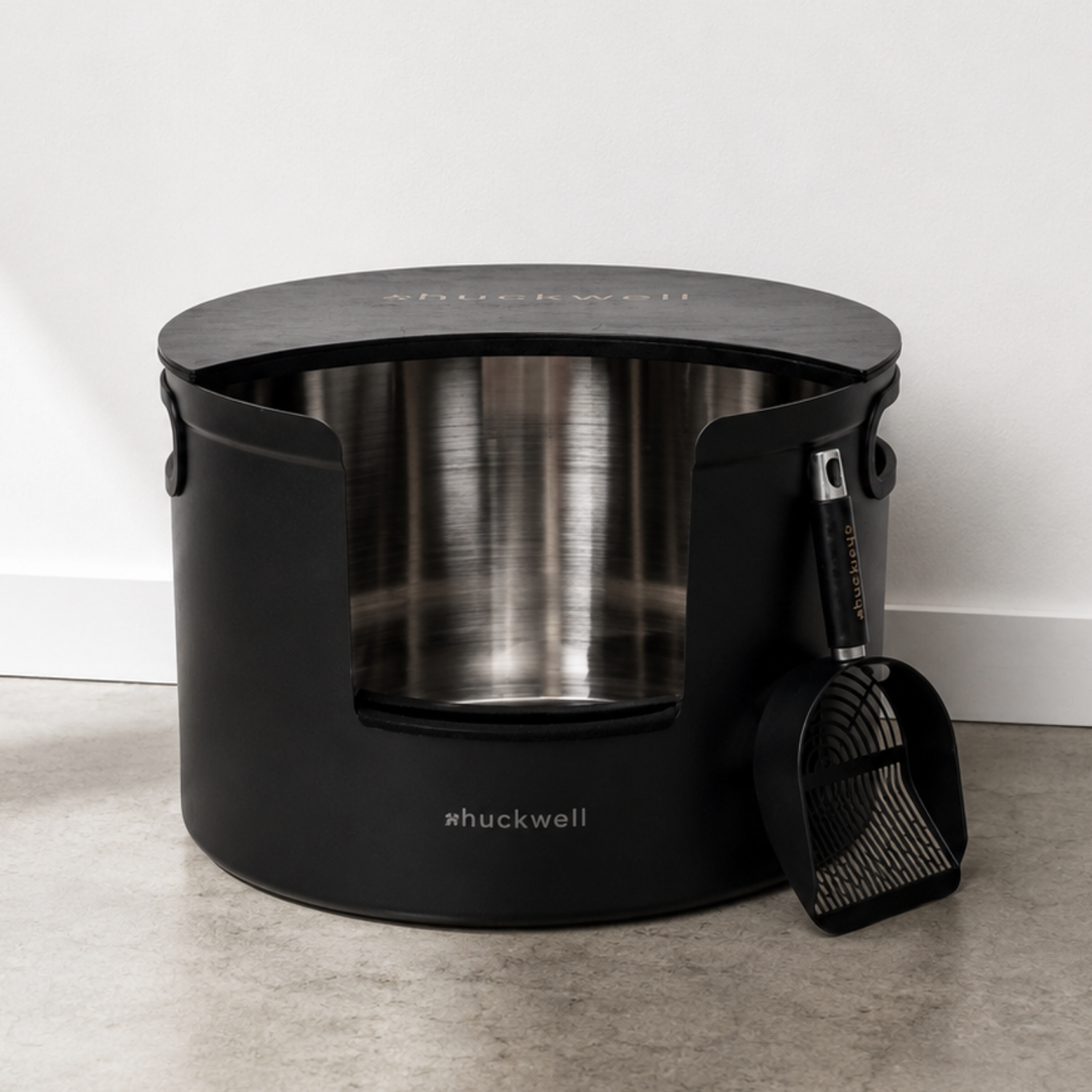
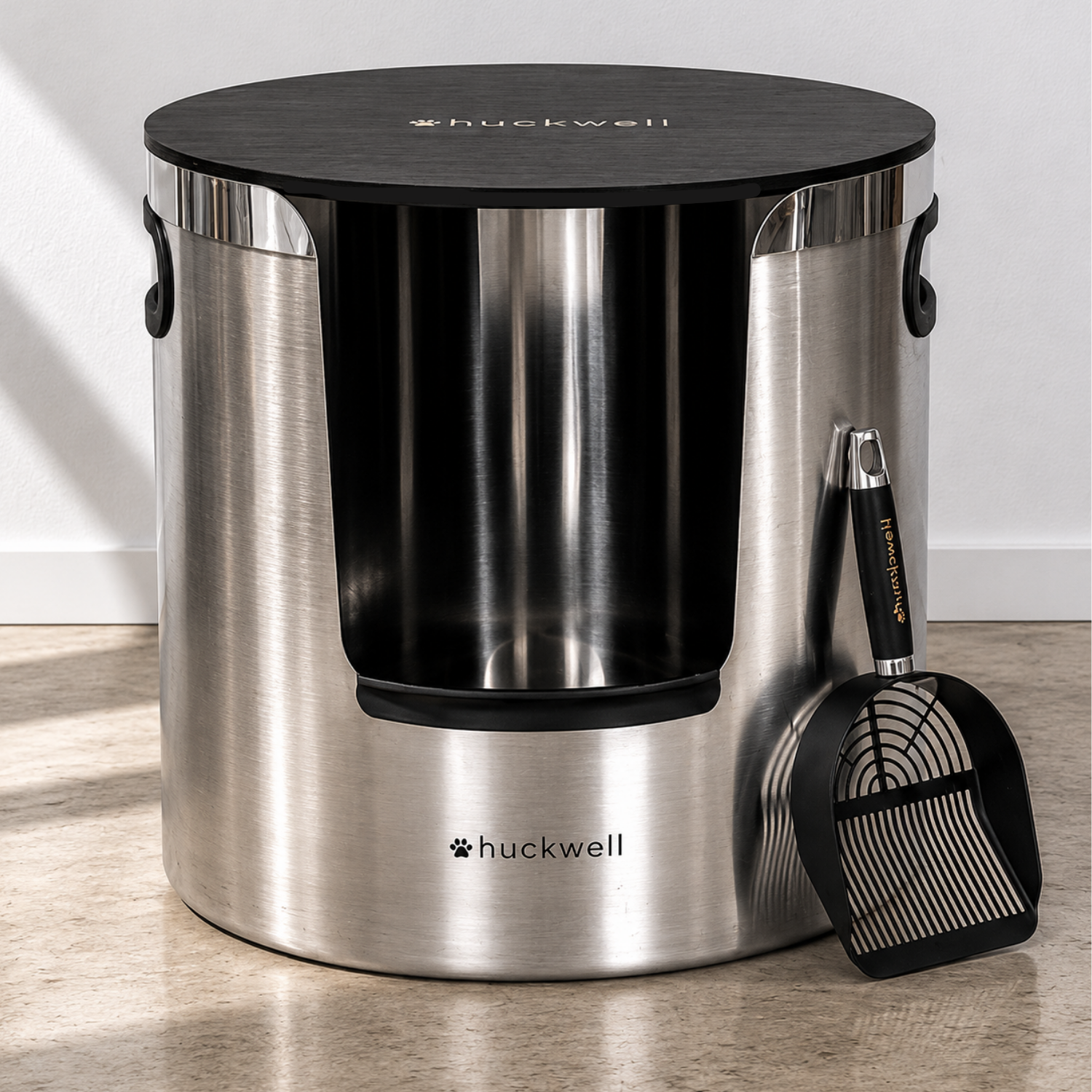
The Halo Extra Tall has 16-inch walls on all sides with a single entry cut at a height that allows cats easy access while maintaining the tall walls everywhere else. This design stops access for most dogs under 40 to 50 pounds without requiring a top-entry design.
For larger dogs, pairing the Halo Extra Tall with a simple room divider or pet gate positioned to block the dog's approach angle adds an additional layer without restricting your cat.
Does a Round Design Help with Dog-Proofing?
Yes, in a specific way. Rectangular litter boxes have corners that create low points where the wall meets the floor at an angle. Dogs often probe these corners first because they offer a slightly easier reach angle.
A round litter box has no corners, no low points, and no angles to exploit. The wall height is consistent all the way around except for the entry. For a dog trying to reach in, there is no easier spot to target.
The round design was built primarily for cat comfort and hygiene, but the absence of corners is a genuine structural advantage in a dog-and-cat household. Read more about why the round design matters in our Why Round page.
Why Material Matters More in Multi-Pet Homes
In a household with a dog that is accessing the litter box regularly, hygiene concerns compound quickly. A plastic litter box develops microscopic surface scratches that trap bacteria. In a home where a dog is physically interacting with the box, spreading bacteria from the box into the rest of the home becomes a more significant risk.
304-grade stainless steel is non-porous. The surface does not harbor bacteria in the same way plastic does. A thorough wipe-down genuinely cleans the surface rather than just reducing what is embedded in it. In a multi-pet home where hygiene risk is higher, the material difference matters more, not less.
This is also relevant to cat health. A dog that accesses the litter box disturbs the litter, redistributes waste, and changes the box environment in ways cats find aversive. Cats whose boxes are regularly disturbed by a dog often begin avoiding the box. A box that is easier to keep genuinely clean reduces that avoidance risk.
For more on how material affects long-term hygiene, read Why Does My Cat's Litter Box Smell Even After Cleaning?
Sizing Considerations in Dog-and-Cat Homes
The same sizing rules apply in multi-pet homes. Every litter box should meet the 1.5x rule for your largest cat, and you should follow the N+1 quantity guideline.
One additional consideration in a dog-and-cat home: if your dog successfully accesses one box, your cats need alternatives they can reach without passing through an area the dog is patrolling. Box placement matters here. A cat that has to walk past a dog to reach the only accessible litter box will often avoid the box entirely.
Spread boxes across different areas of the home, including at least one location the dog does not frequent. This gives every cat a low-stress option regardless of where the dog is at any given moment.
For full sizing guidance see our Litter Box Size Guide and our veterinary guidelines post.
Quick Reference: Dog-Proofing by Dog Size
| Dog size | Typical shoulder height | Recommended solution |
|---|---|---|
| Small (under 20 lbs) | Under 10 inches | Halo Extra Tall 16-inch walls, entry facing away from dog's approach |
| Medium (20 to 50 lbs) | 10 to 18 inches | Halo Extra Tall plus room positioning or a low gate blocking approach |
| Large (over 50 lbs) | Over 18 inches | Halo Extra Tall plus a dedicated room with a cat door sized to exclude the dog |
A cat door cut to the size of your cat and installed in a door or room divider is the most reliable solution for large dogs. It gives your cat permanent private access while physically excluding a dog of any size.
Frequently Asked Questions
What is the best litter box to keep dogs out?
A litter box with walls of at least 12 to 16 inches stops most small to medium dogs without requiring a top-entry design that many cats dislike. The Halo Extra Tall has 16-inch walls on all sides with a single side entry at cat height. For large dogs, pairing a tall-walled box with a dedicated room and a cat-sized door is the most reliable solution.
Why does my dog keep eating cat poop?
This is called coprophagia and it is extremely common in dogs living with cats. Cat waste contains undigested protein and nutrients that dogs find appealing from a scavenging instinct standpoint. Training can reduce the behavior but rarely eliminates it when the litter box is physically accessible. Physical barriers are more reliable than behavioral training in a multi-pet household.
Is it bad for dogs to eat cat litter?
Yes. Beyond the hygiene concerns of consuming cat waste, clumping cat litter can expand in a dog's digestive tract if ingested in quantity. Dogs that regularly access the litter box should be considered at risk for litter ingestion. Preventing physical access to the box removes this risk entirely.
Can cats use a top-entry litter box?
Many healthy adult cats can. However, kittens, senior cats, and cats with arthritis or joint issues often cannot manage a top-entry design comfortably. In a multi-cat household with cats of different ages, a top-entry box frequently excludes the most vulnerable cats. High-walled side-entry designs like the Halo Extra Tall offer better accessibility across different life stages.
Will my cat use a litter box with high walls?
Yes. Cats do not avoid boxes because the walls are tall. They avoid boxes because of cleanliness, odor, size, or location. The Halo Extra Tall has a side entry cut at standard cat entry height so your cat walks in normally. The tall walls are on all sides except the entry, which means your cat's experience inside the box is unchanged from a standard box.
How do I stop my dog from going near the litter box?
Training can help but physical barriers are more reliable long term. Tall-walled litter boxes, dedicated rooms with cat-sized doors, and strategic box placement away from the dog's regular zones all reduce access more consistently than behavioral training alone in a home where the dog and cat share the same spaces daily.
Does the litter box location matter in a dog-and-cat home?
Significantly. Place at least one box in a location the dog does not frequently access, such as a bedroom, laundry room, or upper floor. Cats need to reach the box without having to navigate through a dog's territory. A cat that associates litter box access with dog proximity will often avoid the box, which leads to inappropriate elimination elsewhere.
For high-peeing cats in the same household, the Halo Extra Tall solves two problems at once. Read more in our guide to Best Litter Box for High-Peeing Cats. For multi-cat households also managing dogs, our Best Litter Box for Multiple Cats guide covers quantity and placement in detail.