
What Size Litter Box Does My Cat Actually Need?
Your cat's litter box should be at least 1.5 times the length of their body from nose to tail base. For most adult cats that means a minimum of 20 to 24 inches of interior space. For large breeds like Maine Coons, Ragdolls, and Norwegian Forest Cats, you need an XL box with at least 22 to 24 inches of usable interior space.
Most litter box problems including box avoidance, missed edges, and excessive scatter come down to one thing: the box is too small.
This guide gives you the practical numbers to find the right fit for your specific cat. If you want to understand the veterinary research and AAHA-AAFP guidelines behind these recommendations, read How Big Should a Litter Box Be? What the Veterinary Guidelines Actually Say.
The Simple Rule for Litter Box Sizing
The rule used by most feline behavior experts is straightforward.
Your litter box should be 1.5 times the length of your cat from nose to tail base (not including the tail itself).
So if your cat measures 16 inches from nose to tail base, your litter box needs at least 24 inches of usable interior length. If your cat measures 15 inches, you need at least 22 to 23 inches.
Most people have never measured their cat. Most cat owners just buy a box labeled "large" and assume it fits. It often does not.
Litter Box Size Guide by Breed
Use this as a starting point. Individual cats vary so always measure your specific cat rather than relying purely on breed averages.
Small to Medium Breeds (under 10 lbs)
Typical body length: 12 to 16 inches Recommended interior box size: 18 to 24 inches
Breeds: Domestic Shorthair, Siamese, Abyssinian, Devon Rex, Cornish Rex, Russian Blue, Burmese
A standard large litter box works for most cats in this category. Look for high sides if your cat is an active digger.
Medium to Large Breeds (10 to 15 lbs)
Typical body length: 15 to 19 inches Recommended interior box size: 22 to 28 inches
Breeds: Bengal, British Shorthair, Sphynx, American Shorthair, Birman, Tonkinese
Many cats in this range are being undersized by standard litter boxes. Check the interior dimensions before buying and consider an XL if your cat is on the larger end of this range.
Shop Halo Litter Boxes for Single Cat Homes
Large Breeds (15 to 20 lbs)
Typical body length: 18 to 22 inches Recommended interior box size: 22 to 33 inches
Breeds: Ragdoll, Siberian, Norwegian Forest Cat, Turkish Van, Chartreux
Standard large litter boxes are almost always too small for this category. An XL box is not optional here, it is necessary. Cats in this size range that are using a standard box are likely showing avoidance behaviors, missing the edges, or tracking litter excessively.
Shop Halo XL Litter Boxes for Large Breed Cats
Extra Large Breeds (20 lbs and over)
Typical body length: 16 to 24 inches Recommended interior box size: 22 to 24 inches or more
Breeds: Maine Coon, Savannah, Chausie
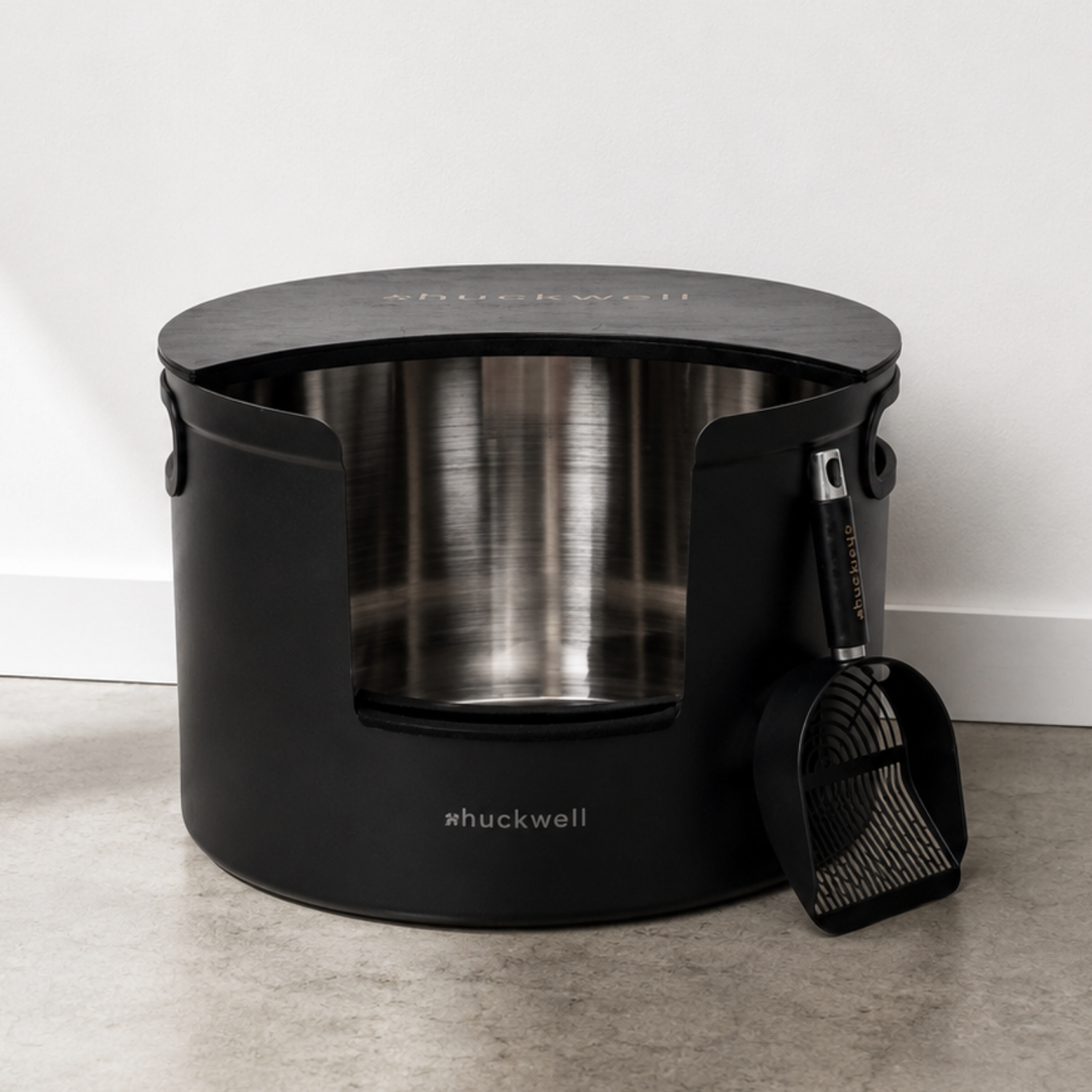
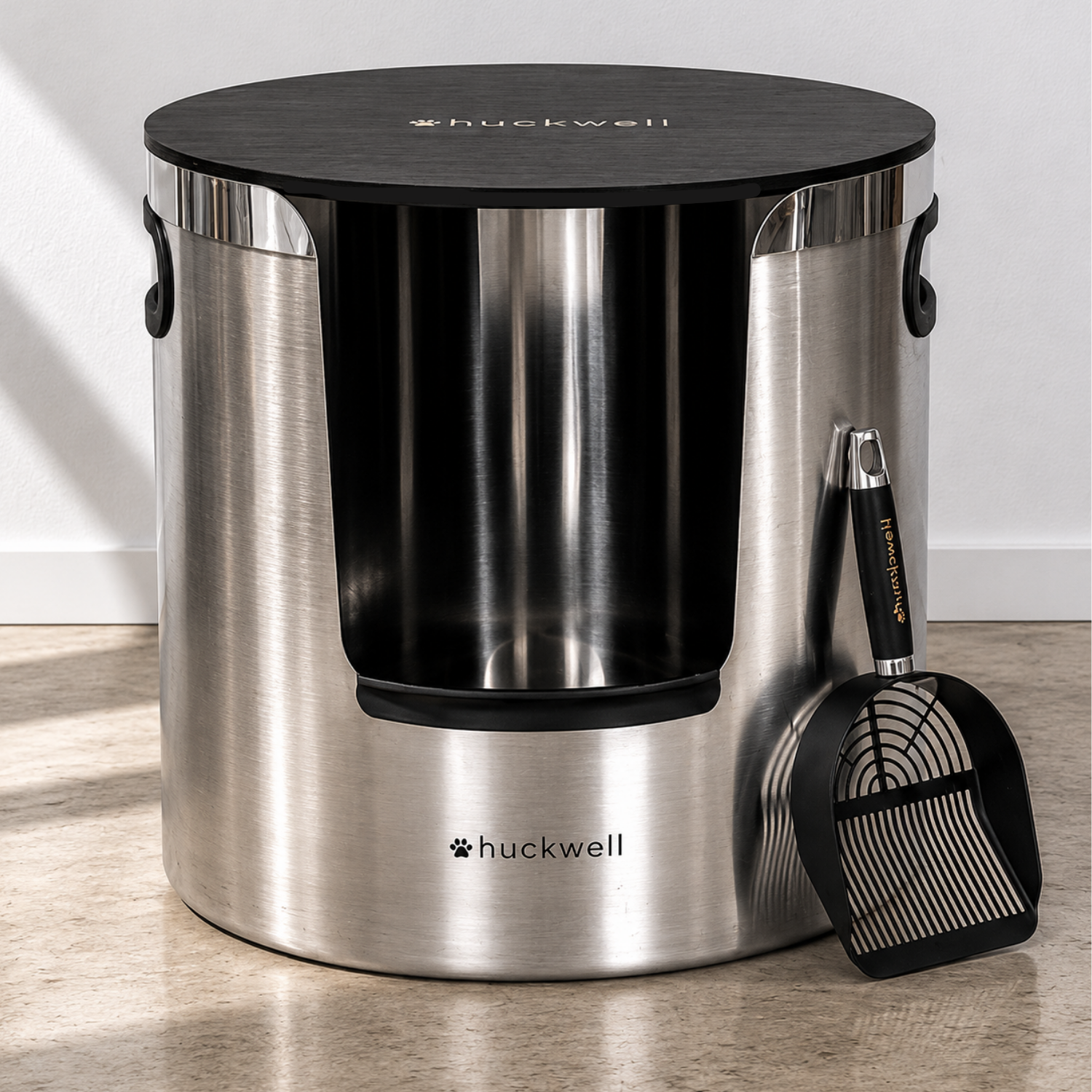
This category needs a purpose-built XL litter box. Standard boxes and most large boxes on the market are not sized for a full-grown Maine Coon or Savannah. The Huckwell Halo XL measures 23.6 inches across, comfortably accommodating most cats in this category. Always check interior dimensions and prioritize turning space over the exterior footprint of the box.
Shop the Halo XL for Maine Coons and Extra Large Breeds
Why the Shape of the Box Matters for Sizing
A round litter box and a rectangular litter box can have the same stated dimensions but very different amounts of usable space.
In a rectangular box, corners collect waste and become areas a cat avoids. The effective usable space your cat will actually use is smaller than the stated dimensions suggest. Corners also make it harder for large cats to turn around naturally.
A round litter box converts all of its interior into usable turning and digging space. There are no corners to avoid, no dead zones for waste to collect, and no awkward positioning required. For large breed cats especially, the round shape makes a meaningful difference in how much space is truly available.
Why Huckwell uses a round design and what it means for your cat
Multi-Cat Homes: How Many Boxes and What Size?
The standard recommendation from feline behavior experts is one litter box per cat plus one extra. So two cats need three boxes, three cats need four, and so on.
On sizing for multi-cat homes:
Every box should meet the size requirement of your largest cat. If you have a Maine Coon and a domestic shorthair, all boxes should be sized for the Maine Coon. Cats will use each other's boxes and a box that is too small for your largest cat will cause problems regardless of which cat uses it.
If space is a concern, one large XL box is better than two small boxes. Cats generally prefer adequate space over proximity to a second inadequate option.
Shop Halo Litter Boxes for Multi-Cat Homes
Kittens: What Size Box Do They Need?
Kittens need a smaller box than adult cats, but for a different reason than most people think. The issue is not interior space but entry height. A kitten under 8 weeks old cannot step over a high-sided box and needs a very low entry point to access the box comfortably.
As kittens grow they adapt quickly, and most cats are ready for a standard adult-sized box by 6 months. If you have a kitten of a large breed like a Maine Coon, plan for an XL box by the time they reach 12 months.
Shop Halo Litter Boxes for Kittens
Signs Your Cat's Litter Box Is Too Small
Not sure if your current box fits? These are the most common signs it does not:
Litter scatter is excessive. When a cat cannot position themselves properly inside the box, they dig at angles that throw litter outward. High sides help but the root cause is usually insufficient space to turn and position correctly.
Your cat hangs over the edge. If any part of your cat's body extends beyond the walls while they are using the box, the box is too small. This is the most direct sign and the most commonly ignored one.
Your cat avoids the box or goes nearby instead. Cats that consistently avoid a litter box that is clean and in a good location are often communicating that the box is uncomfortable. Size is one of the top causes of litter box avoidance after cleanliness.
Your cat exits quickly without covering. Covering is a natural behavior cats perform when they feel secure. A cat that exits immediately without covering often feels too exposed or cramped to complete the behavior naturally.
What About Litter Box Wall Height?
Size isn't only about diameter or length. Wall height determines whether litter and urine stay inside the box.
For most cats a 5 to 6-inch wall is fine. For cats that spray high, dig aggressively, or tend to urinate standing up, standard walls aren't enough. If you're cleaning litter off the floor daily or finding urine on the wall behind the box, wall height is your actual problem.
The Halo Extra Tall has 16-inch walls on all sides. It has the same 18-inch diameter as the Classic but the taller walls contain scatter and spray that standard boxes can't. For a full breakdown of what to look for, see Best Litter Box for High-Peeing Cats.
The Huckwell Halo: Sized for Real Cats
The Halo litter box is available in two sizes to cover the full range of cat sizes accurately.
The Halo suits single cat homes and cats up to around 15 lbs comfortably. The round interior provides more usable space than a comparably sized rectangular box.
The Halo XL measures 23.6 inches across and was designed specifically for large breed cats including Maine Coons, Ragdolls, Norwegian Forest Cats, and Siberians. At 11.8 inches tall with a 6-inch comfort entry, it gives large cats the room they need while keeping litter and scatter where it belongs.
Both are built from 304 food-grade stainless steel. No plastic. No odor absorption. No replacing every two years.
Frequently Asked Questions
How do I measure my cat for a litter box?
Measure your cat from the tip of their nose to the base of their tail (not including the tail itself) while they are standing or lying flat. Multiply that measurement by 1.5 to get the minimum interior length your litter box should provide.
What happens if a litter box is too small for my cat?
Common results include litter scatter, cats hanging over the edge, avoidance of the box entirely, and going outside the box nearby. Cats that feel cramped in their litter box will often find alternatives, which is one of the most common causes of inappropriate elimination.
Is a bigger litter box always better?
Generally yes, within reason. Cats benefit from having room to circle, dig, and cover naturally. There is no real downside to a litter box being larger than the minimum requirement. The only practical constraint is the space available in your home.
Do kittens and adult cats need different sized litter boxes?
Yes. Kittens need a low entry point they can step over easily. As they grow the priority shifts to interior space. A kitten of a large breed should be transitioned to an XL adult box by around 12 months when their full size becomes clear.
What size litter box do I need for two cats?
Size the box for your largest cat and follow the one box per cat plus one extra rule. If both cats are similar in size, two appropriately sized boxes works well. If one cat is significantly larger, ensure all boxes in the home meet the larger cat's size requirements.
Can a litter box be too big for a cat?
In rare cases very small cats or kittens may feel exposed in an extremely large open box, but this is uncommon in adult cats. The far more frequent problem is cats being given boxes that are too small, not too large.
Cat essentials, built to human standards.