
Best Litter Box for High-Peeing Cats (And Why Wall Height Is Everything)
If your cat backs up to the side of the litter box and lets loose, you already know the problem. The litter goes everywhere except where it should. The walls aren't tall enough, the corner takes the hit, and you're cleaning the floor, the wall, and whatever is nearby.
High-peeing is more common than most cat owners expect. Some cats simply aim high. Others, especially larger breeds, males, and senior cats, develop a stance that sends urine straight at the side wall rather than down into the litter. And most standard litter boxes, with walls sitting at 5 to 8 inches, were never designed with these cats in mind.
Wall height is the single most important spec when choosing a litter box for a high-peeing cat. Everything else is secondary.
How High Does a Litter Box Need to Be for a High-Peeing Cat?
Most veterinary guidelines recommend litter box walls of at least 8 inches for average cats. For cats that spray high, aim sideways, or have a wide stance, you need significantly more than that.
The general rule of thumb among cat behaviorists is that wall height should clear your cat's spray zone with room to spare. For most high-peeing cats that means a minimum of 12 inches, and ideally closer to 15 to 16 inches on all sides.
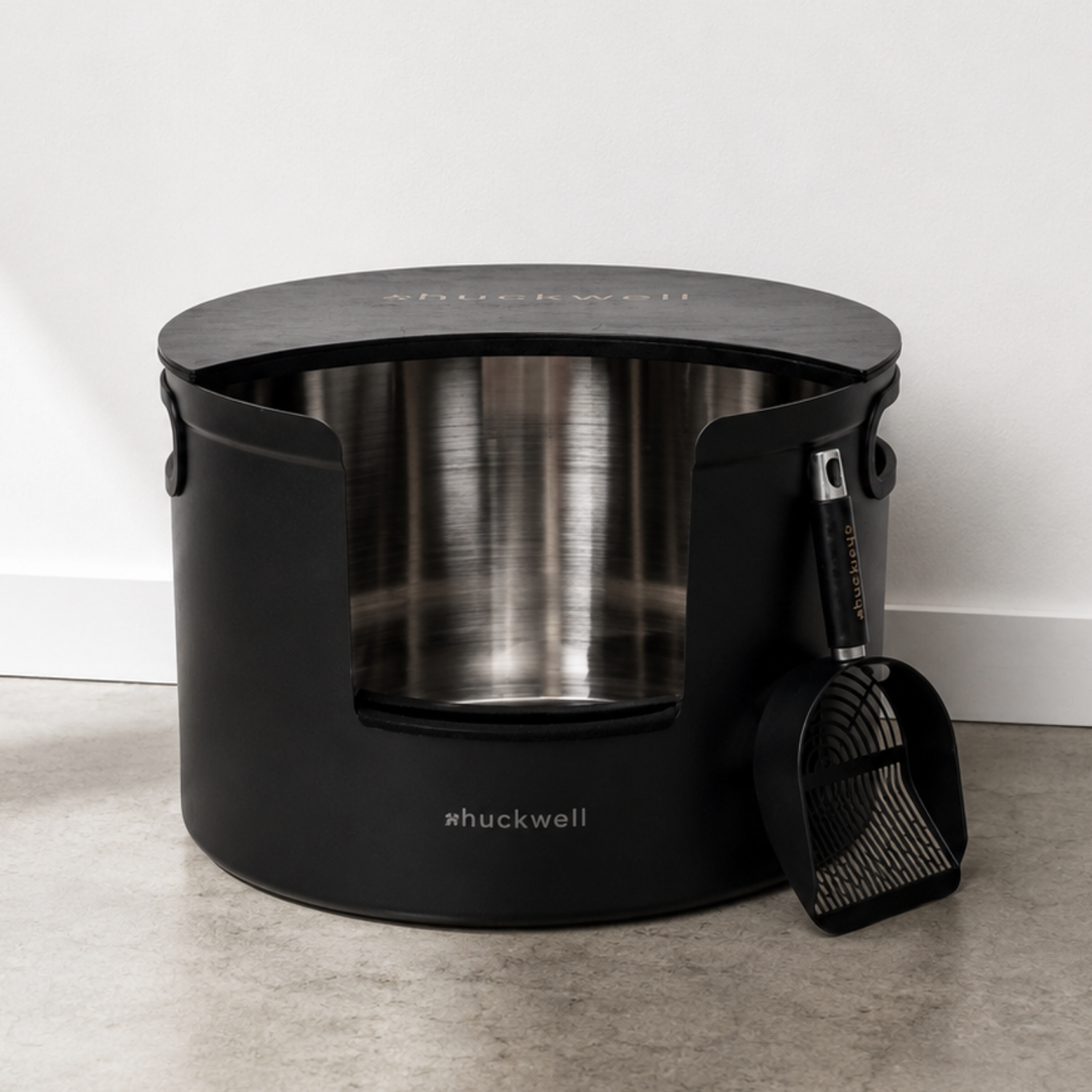
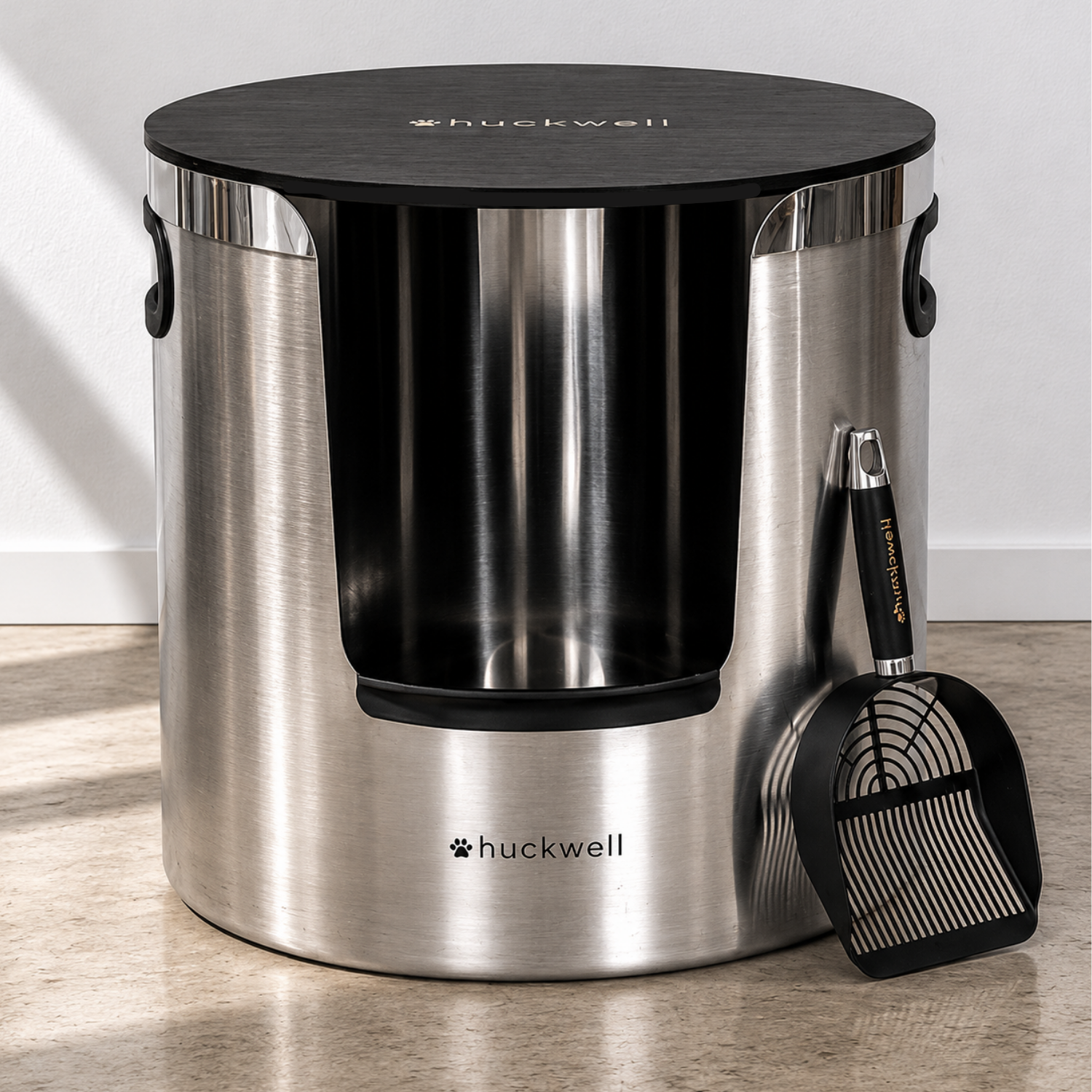
This is why the Halo Extra Tall was designed with 16-inch walls. Not as a marketing number, but as a functional answer to one of the most common litter box complaints cat owners have.
Why Round Matters for High-Peeing Cats
A rectangular litter box has corners. Corners are where urine pools, soaks in, and becomes nearly impossible to clean thoroughly. For a high-peeing cat, corners are especially problematic because the spray hits a vertical surface at an angle and runs down into the seam.
A round litter box eliminates corners entirely. There is no seam, no angle, no place for urine to collect and sit. The round design of the Halo means spray hits a continuous curved wall and slides cleanly down to the base, where it lands in the litter rather than soaking into a joint.
This matters more for high-peeing cats than for any other type of cat owner.
Why Material Matters as Much as Shape
Wall height and shape solve the containment problem. But if your litter box is made of plastic, you still have a hygiene problem.
Plastic develops microscopic scratches over time, even with gentle cleaning. Those scratches trap urine, bacteria, and odor in ways that no amount of scrubbing fully removes. For a cat that sprays the walls heavily, a plastic box becomes saturated with odor-causing bacteria faster than most owners realize. That odor doesn't just affect your home. It affects whether your cat will use the box at all.
304 stainless steel has a non-porous surface that does not scratch, does not absorb odor, and does not harbor bacteria. The same grade of steel used in commercial kitchens and medical equipment. When urine hits the wall of a Halo, it doesn't soak in. It runs down, lands in the litter, and wipes clean.
This is why Huckwell customers report up to 95% reduction in litter box odor compared to plastic boxes.
Does Litter Box Size Matter Beyond Wall Height?
Yes, and it's connected. A litter box that is too small forces your cat into an awkward position that can actually contribute to high-peeing behavior. When a cat can't turn around or position naturally, they aim wherever there's space.
The AAHA and AAFP guidelines recommend a litter box that is at least 1.5 times the length of your cat from nose to tail base. Most standard boxes fall well short of this, particularly for large breeds like Maine Coons, Ragdolls, and Norwegians.
A 74-cat study found that cats made 60% more deposits in larger litter boxes, suggesting that size directly influences willingness to use the box correctly. A cat that has room to position naturally is less likely to end up spraying the wall.
The Halo XL at 23.6 inches diameter gives even the largest cats full room to turn, position, and eliminate comfortably. Paired with the Extra Tall wall height, it addresses both the size and containment problem simultaneously.
Not sure which size is right for your cat? Visit our Compare Sizes page for a full breakdown.
What to Look for in a Litter Box for High-Peeing Cats
When evaluating any litter box for a cat that sprays high, here is what actually matters:
Wall height: Minimum 12 inches, ideally 15 to 16 inches on all sides, not just the back wall. Some boxes advertise high sides but have a low front entry that defeats the purpose entirely.
No corners: Corners trap urine and bacteria. A round or fully enclosed design eliminates this problem.
Non-porous material: Plastic absorbs odor over time regardless of how often you clean it. Stainless steel or glazed ceramic are the only materials that stay truly clean.
Entry design: A side entry at the right height keeps litter in while still being accessible. Too low and litter escapes. Too high and older or arthritic cats struggle to get in.
Ease of cleaning: A high-peeing cat means more wall contact. Your litter box needs to wipe down completely in under two minutes or it won't get cleaned as often as it should.
The Halo and Halo Extra Tall were designed with all of these criteria in mind. You can read more about the full design rationale on our FAQs page.
The Bottom Line
If your cat pees high, the solution is not more cleaning. It is the right box. Tall walls, a round design that eliminates corners, and a stainless steel surface that never absorbs odor are the three things that actually solve the problem.
The Halo Extra Tall was built for exactly this cat. 16-inch walls, seamless round construction, 304 stainless steel throughout.
Your floor will thank you.
Looking for more guidance on choosing the right litter box? Visit our Cat Health Blog or head to our FAQs for answers to the most common questions we hear from cat owners.