
The Difference Is in the Details
How 304-grade stainless steel outperforms lower metals and plastic in every way.
Corrosion Resistance
Very High (10+ years)
Moderate (1–2 years)
Low
Odor Absorption
<0.2% (virtually none)
4–6%
Up to 15%
Bacterial Growth
Extremely Low (99% less than plastic)
Moderate
Very High
Durability
10+ years
~2 years
1–2 years
Surface Porosity
Non-porous
Slightly porous
Highly porous
Chemical Safety
Food-grade, non-toxic
Potential leaching
Microplastics, BPA
Environmental Impact
100% recyclable
Limited recyclability
High waste
304-grade stainless steel is the same material trusted in hospitals and commercial kitchens for its safety and durability.
The questions humans ask. (Cats already know.)
 Materials and Safety
The Halo's design reflects the core principles feline health professionals recommend for litter box environments. These include:
- interior space large enough for a cat to fully turn without restriction (the standard is at least 1.5 times the cat's body length)
- wall height sufficient to contain spray from cats who void standing or at an angle
- a non-porous surface that does not accumulate ammonia or pathogenic bacteria over time
- no sharp edges or hardware that could cause paw or skin injury.
304-grade stainless steel is the same material standard used in veterinary clinical equipment. The Halo was designed to meet those standards in a home environment.
Most stainless steel litter boxes on the market use 201-grade steel, which contains less nickel, corrodes faster in ammonia-heavy environments, and develops surface degradation within one to two years. Huckwell uses 304-grade stainless steel, the same alloy standard in food preparation equipment and veterinary surgical instruments.
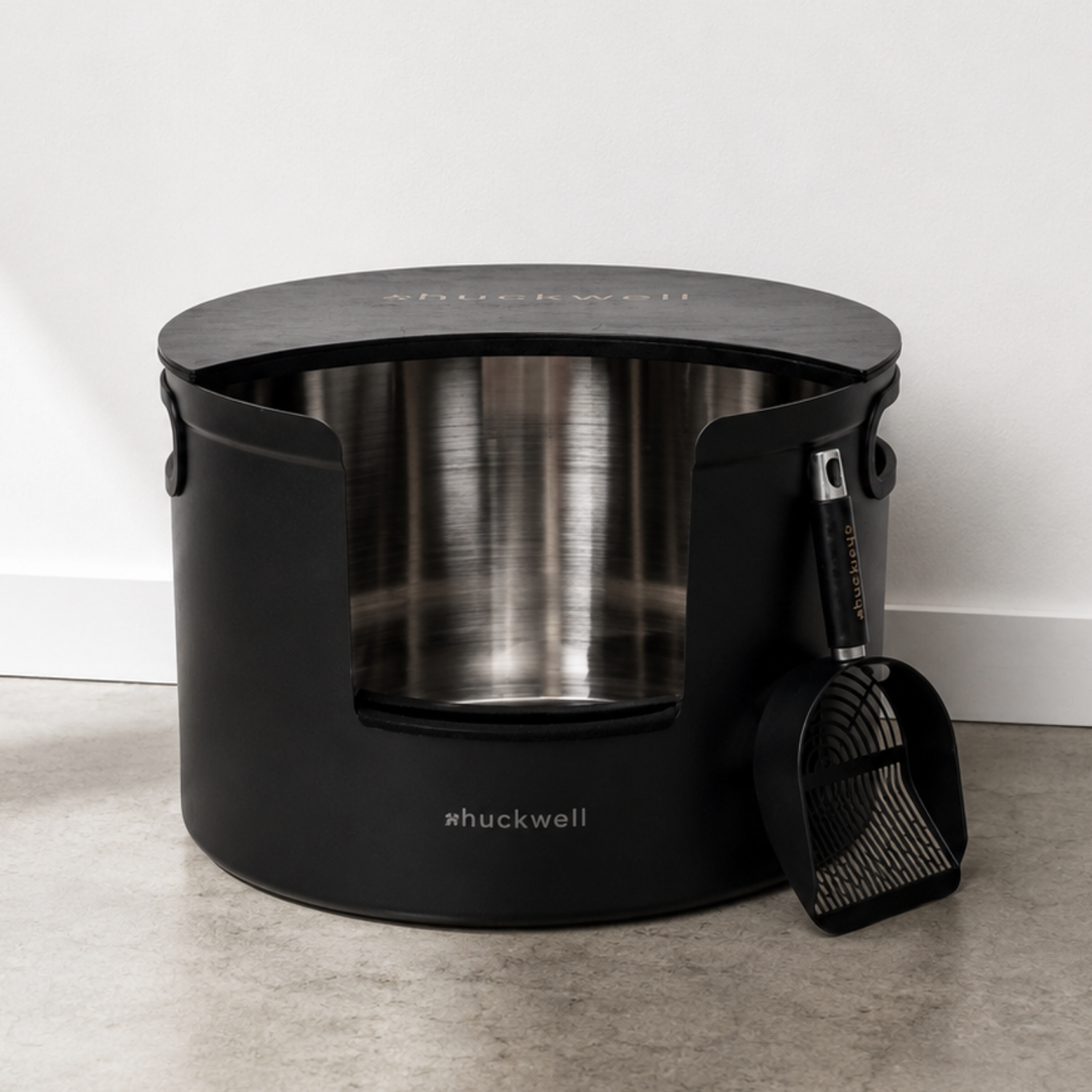
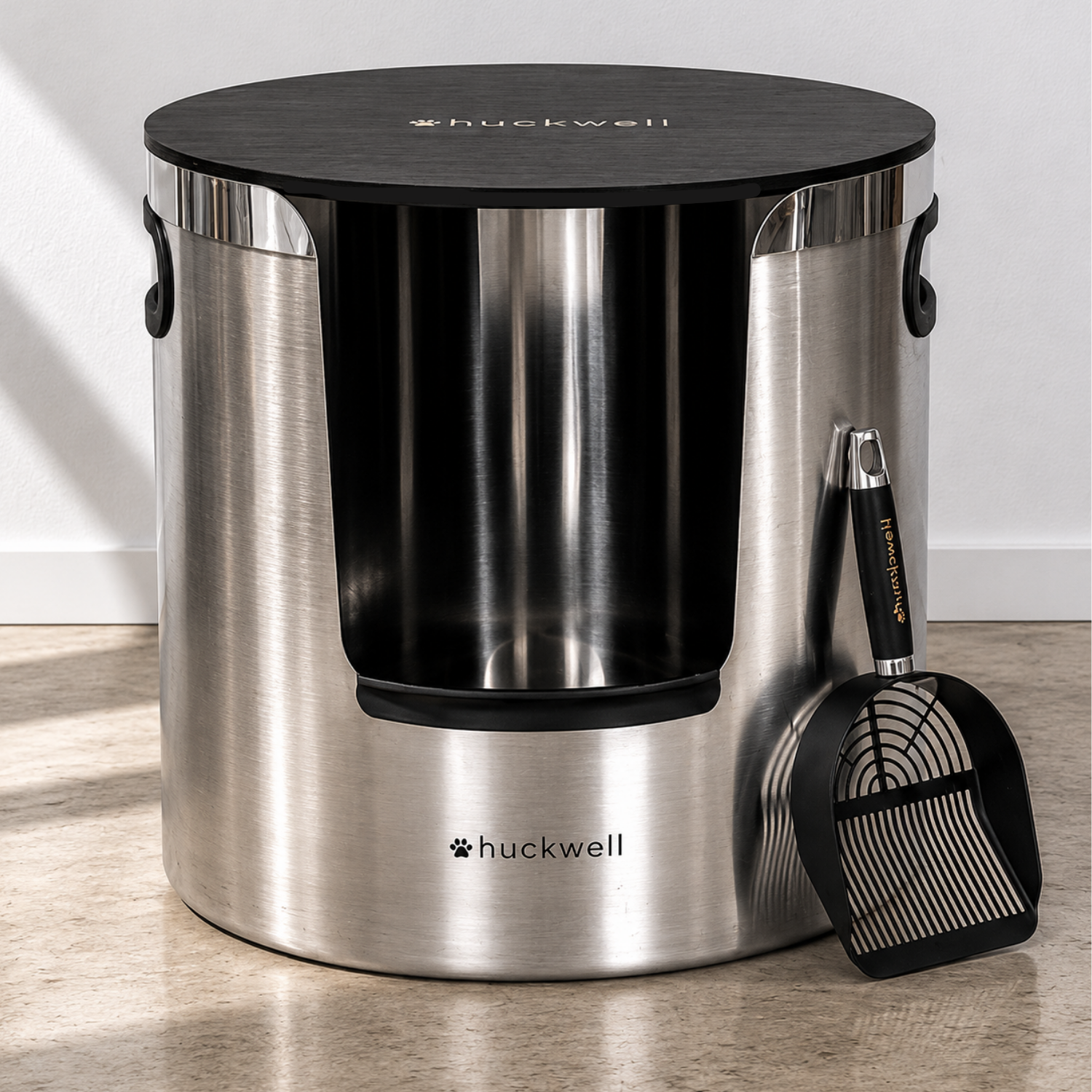
The Halo is also designed around feline behavioral needs: a round interior that lets cats fully turn, high walls to contain spray and scatter, smooth rounded edges with no pinch points, and a seamless floor that wipes clean without scrubbing. It is the only stainless steel litter box on the market built to both food-grade material standards and feline health design principles.
304-grade stainless steel is a food and medical-grade alloy containing 18% chromium and 8% nickel, making it highly resistant to rust, corrosion, and bacterial growth. 201-grade steel uses manganese instead of nickel to reduce costs, which makes it significantly more vulnerable to corrosion when exposed to cat urine and ammonia over time.
In a litter box environment, that degradation means pitting, surface damage, and eventually odor absorption from a material marketed as odor-proof. Huckwell uses 304-grade exclusively because the environment inside any litter box is chemically aggressive and lower-grade materials fail in that context.
Yes. 304-grade stainless steel is the same material used in veterinary surgical equipment, food preparation surfaces, and pet water bowls recommended by veterinarians. It is non-toxic, non-reactive, and does not leach chemicals, microplastics, or BPA into the environment.
The Halo's interior is also finished with smooth, rounded edges and no exposed hardware, meaning there are no sharp contact points that could injure paws or sensitive skin. It is one of the safest litter box materials available for cats.
Odor and Hygiene
Yes. The surface of 304 stainless steel is non-porous, meaning urine, ammonia, and bacterial waste cannot penetrate the material the way they do with plastic. Plastic litter boxes develop microscopic scratches within weeks of use, and those scratches permanently harbor odor-causing bacteria that no cleaning product can fully eliminate.
With the Halo, odor is removed when you clean because nothing is absorbed into the surface in the first place. Most customers notice a significant improvement within the first few days of switching.
A clean, adequately sized litter box is one of the most important environmental factors in feline urinary health. Cats with urinary tract issues, FLUTD, or feline idiopathic cystitis are often sensitive to litter box conditions and may avoid boxes that are too small, not cleaned frequently enough, or that harbor strong ammonia odors from bacterial buildup.
The Halo's non-porous 304 stainless surface means ammonia and bacteria are eliminated with each cleaning rather than accumulating in the material. The spacious round interior also reduces the postural stress of using an undersized box. If your cat has been diagnosed with a urinary condition, consult your veterinarian about the role litter box hygiene plays in their care plan.
Design and Size
Cats naturally circle before eliminating, a deeply instinctive behavior. A round interior gives cats unobstructed space to complete that motion without pressing against a corner or wall. Rectangular litter boxes also concentrate waste in corners, which are impossible to fully sanitize because a scoop cannot reach them cleanly.
The Halo's round interior has no corners, so waste does not accumulate in unreachable areas and the entire surface can be wiped clean in a single motion. Feline behavior specialists consistently note that cats prefer litter box shapes that allow free movement, and round designs support that preference.
A good rule of thumb is that a litter box should be at least 1.5 times the length of your cat. For large breeds like Maine Coons or Ragdolls, that typically means 20 inches or more. The Halo XL is 23.6 inches in diameter and 11.8 inches tall, making it one of the most spacious options available for large cats.
A rectangle is not designed for cats. Huckwell is shaped specifically around natural feline behavior, including entry height, interior space, and rounded edges for comfort. It also includes a seamless interior, a fitted mat, and accessories designed to make daily cleaning easier and more hygienic.
Using the Halo
Most cats transition easily, especially when the same litter is used during the switch. Because the shape and feel are familiar, cats typically accept the Halo quickly. As with any new litter box, we recommend placing it in the same location as your previous box and allowing a short adjustment period.
Very. The stainless steel interior wipes clean without scrubbing, soaking, or harsh chemicals. Because nothing absorbs into the surface, regular cleaning takes less time and effort compared to plastic boxes.
Yes. The Halo works with all standard litter types including clumping clay, non-clumping clay, silica crystal, wood pellet, paper, and corn or wheat-based litters. Because the interior is seamless and non-porous, there are no ridges or textures that trap litter granules, which makes cleanup faster regardless of litter type.
If you are transitioning your cat from an existing box, we recommend using the same litter your cat already uses during the adjustment period.
Self-cleaning litter boxes use motorized raking or rotating mechanisms that have plastic components, sensors, and internal chambers where waste and bacteria accumulate and are difficult to fully sanitize. Most also require proprietary litter cartridges or subscription refills.
The Halo requires no power, no subscriptions, and no mechanical parts that can fail. The 304 stainless steel interior is fully exposed and cleanable in under a minute. For cat owners who want a genuinely hygienic solution without the cost and complexity of automated systems, the Halo is the more practical long-term choice.
The standard Halo is best suited for adult cats and older kittens. The entry height is designed to be accessible without being so low that litter scatter becomes an issue. For very young kittens (under 12 weeks), a shallower entry point is generally recommended until they develop the muscle coordination to step over a higher wall comfortably.
If you have a kitten, the standard Halo works well once they reach approximately 3 to 4 months of age. For a multi-pet household with both kittens and adults, one lower-sided transitional box alongside the Halo is a common setup during the kitten's early weeks.
Durability and Value
With normal use, the Halo Litter Box is designed to last for many years (10+). Unlike plastic boxes that scratch, absorb odor, and need frequent replacement, stainless steel maintains its integrity over time.
The Halo is priced to reflect what it actually is: a long-term replacement for a category of products most people replace every one to two years. A plastic litter box that costs $30 and gets replaced annually costs $150 over five years.
The Halo is built from 304 food-grade stainless steel designed to last ten or more years without degradation, odor absorption, or bacterial buildup. Beyond material quality, the design reflects feline behavioral and health research, including interior sizing, entry height, round form, and smooth surface finish.
You are not paying more for a litter box. You are paying once for the right one.