Best No Mess Litter Box in 2026
The short answer: The best no mess litter box has high walls to contain scatter, a round or no-corner design that distributes litter evenly, and a non-porous surface that stays genuinely clean between scoops. Most litter box mess comes from three things: walls that are too low, corners that accumulate waste, and a surface that holds odor even when the box looks clean. The right box design eliminates all three.
Litter on the floor is one of the most common complaints among cat owners. You scoop, you sweep, you wipe the surrounding floor, and within hours there is litter tracked across the room again. For many owners it becomes such a routine that they stop questioning whether it has to be this way.
It doesn't. Most litter scatter is a box design problem, not a cat behavior problem.
This guide breaks down what causes litter mess, what design features actually contain it, and what to look for when choosing a no mess litter box.
What Causes Litter Scatter and Tracking
Before fixing the problem it helps to understand exactly what is happening.
Digging and covering: Cats are instinctively thorough about covering waste. The more energetically your cat digs and covers, the more litter gets displaced toward the walls and over the rim. Low walls cannot contain this movement. High walls absorb it.
Entry and exit: Every time your cat steps out of the litter box, litter clings to their paws and falls off in the surrounding area. The amount of tracking depends on how much litter is displaced near the entry and how the entry is designed.
Box positioning: Cats often position themselves close to the entry when using the box, which means digging and covering happens near the lowest point of the box. In boxes where the entry is cut very low, litter exits directly through the opening.
Box size: A cat that cannot turn comfortably digs at awkward angles that throw litter outward rather than downward. An undersized box causes more scatter than a properly sized one, even with identical wall heights.
Corner accumulation: In rectangular boxes, litter collects in corners. When a cat digs near a corner, the accumulated litter gets displaced outward in a concentrated burst. Corners also trap waste and make the area near them the least appealing part of the box, which pushes cat traffic toward the center and entry, compounding scatter.
Wall height is the biggest lever. Low walls are the primary cause of scatter in most households. A box with 5 to 6-inch walls cannot contain an active digger. A box with 12 to 16-inch walls contains the vast majority of digging displacement regardless of how energetically your cat covers.
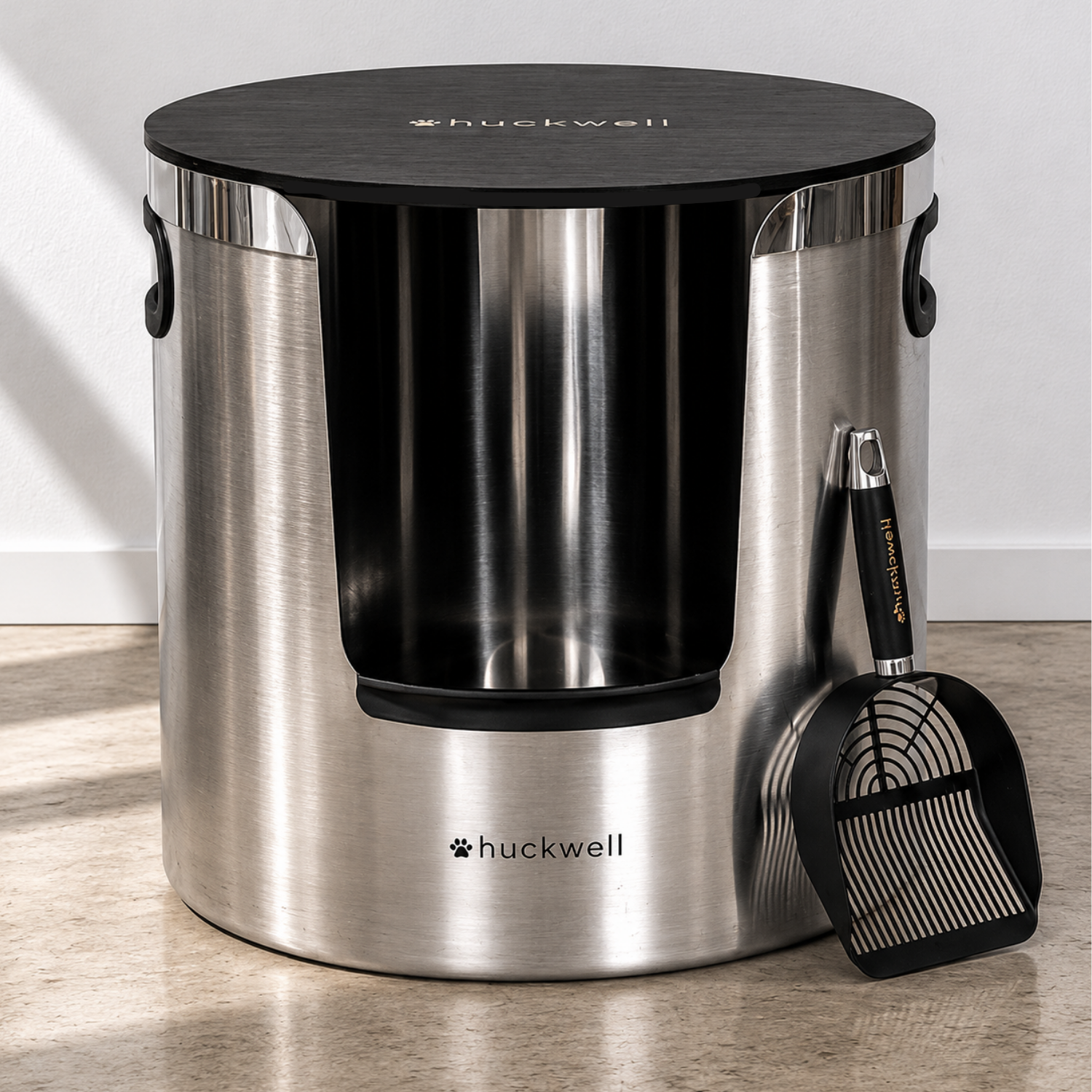
The Halo Extra Tall has 16-inch walls on all sides. The entry is cut at standard cat access height so your cat walks in normally, but the walls surrounding the interior are tall enough to stop scatter before it leaves the box. For cats that are heavy diggers or particularly energetic coverers, this single change removes most floor mess.
Round design eliminates corner scatter. Corners are scatter accelerators. Litter accumulates in them, cats avoid them, and when cats do interact with them the displacement is directional and concentrated. A round interior has no corners. Litter distributes evenly around the curved walls, digging displacement is absorbed by the continuous curved surface, and there are no accumulation zones to create concentrated scatter events.
The Halo's round design was built primarily for cat comfort and hygiene but the no-corner geometry is a meaningful scatter reduction feature in its own right.
Box size reduces awkward digging angles. A cat with enough room to turn and position naturally digs straight down rather than at sideways angles that throw litter outward. The AAHA-AAFP 1.5x sizing guideline exists for behavioral reasons but the sizing benefit for scatter reduction is real. A properly sized box simply produces less mess than an undersized one.
Not sure if your current box is the right size? Our Litter Box Size Guide covers sizing by breed and body length.
Entry design matters for tracking. The entry cut height and position determines where litter displacement concentrates near the opening. An entry that is too wide or too low channels scatter directly outward. The Halo's entry is sized to allow comfortable cat access without creating a wide opening for litter to escape through.
Why Litter Mats Only Partially Help
Litter mats are a popular solution and they do reduce tracking by catching litter from your cat's paws at the exit point. They are worth using. But they address tracking rather than scatter, and they do not help with litter that clears the box walls entirely.
A mat placed at the box entry catches paw-transferred litter. It does nothing for litter that lands two feet away because it cleared a low wall during digging. For cats that are heavy scatter producers, mats alone are not enough. The right box paired with a mat is significantly more effective than either alone.
The Hygiene Side of No Mess
A no mess litter box is also a more hygienic one. Litter scatter carries bacteria and ammonia compounds from the box into the surrounding area. The less scatter, the less contamination reaches your floors.
This is compounded by box material. A plastic litter box with embedded bacteria adds an odor component to the mess problem. The box itself becomes a contamination source even when visually clean. A non-porous 304-grade stainless steel surface does not harbor bacteria in the same way, which means the hygiene benefit of reducing scatter is not undermined by the box itself being a bacteria reservoir.
Why 304-grade stainless steel matters for litter box hygiene
Which Halo Is the Best No Mess Option?
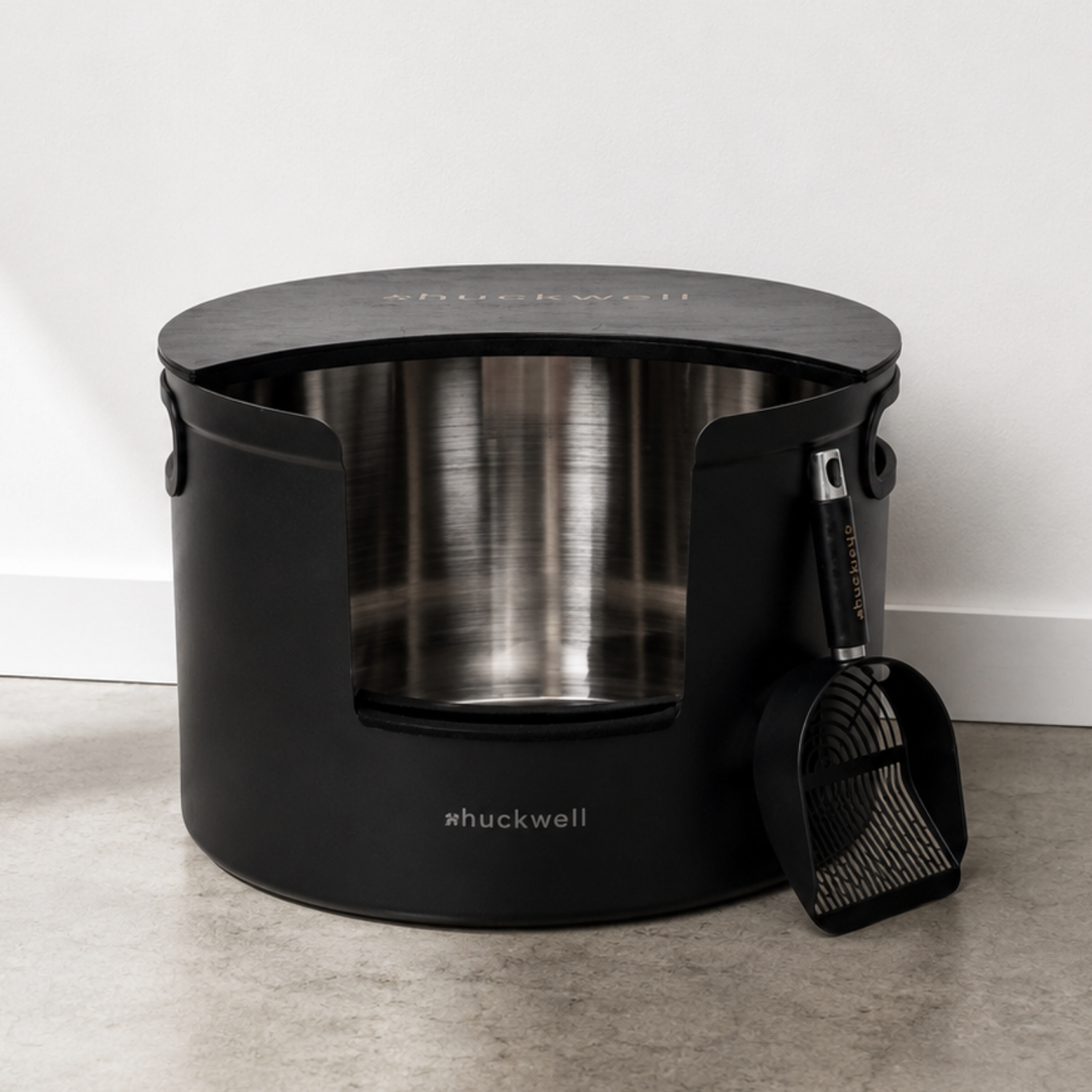
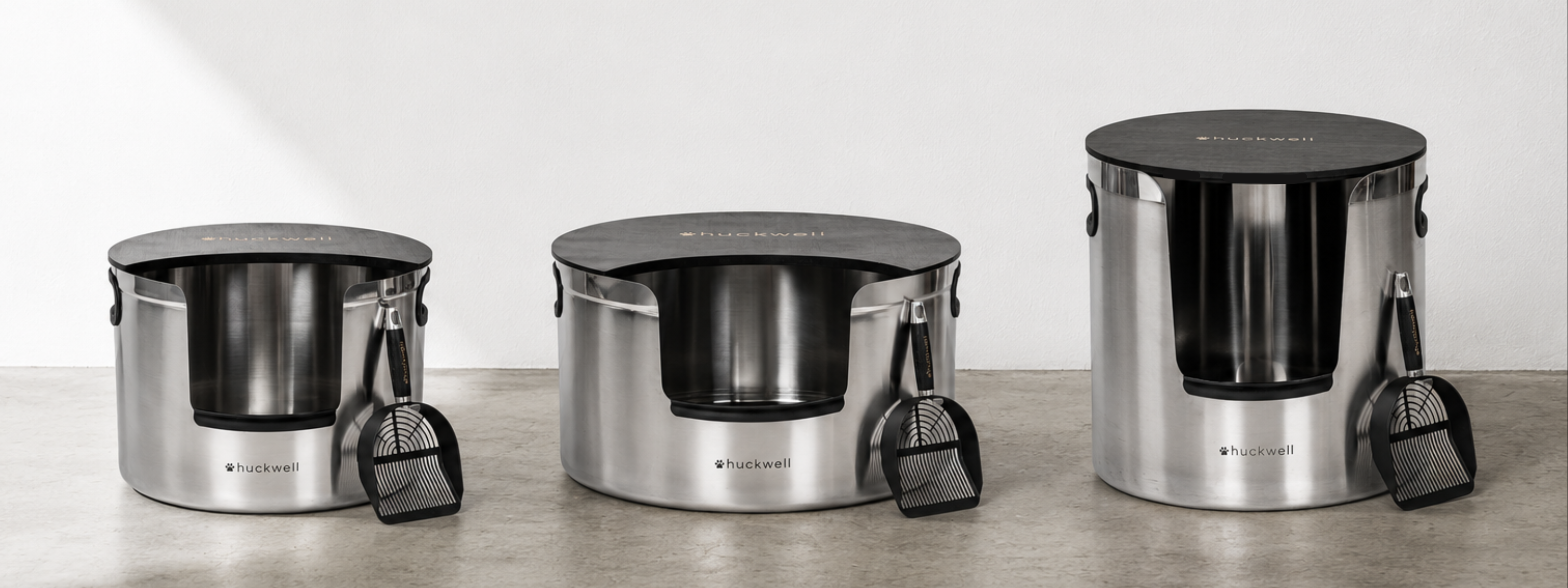
For most cats: The Halo Classic at 18 inches with standard walls handles scatter for average diggers. The round design and non-porous surface keep the surrounding area significantly cleaner than a plastic rectangular box.
For heavy diggers and scatter producers: The Halo Extra Tall is the strongest no mess option in the lineup. The 16-inch walls contain what standard boxes cannot. If you are currently sweeping litter daily from a wide radius around your box, the Extra Tall is the most direct solution.
For large breeds and multi-cat homes: The Halo XL at 23.6 inches gives larger cats room to position naturally, which reduces the awkward digging angles that produce the most scatter. For households where scatter is driven by box size rather than wall height, the XL addresses the root cause.
Not sure which fits your cat? Use our Compare Sizes page to find the right option.
Frequently Asked Questions
What is the best litter box to reduce litter scatter?
A litter box with walls of at least 12 to 16 inches on all sides contains the majority of scatter from even heavy diggers. A round design eliminates corner accumulation that makes scatter worse in rectangular boxes. The Halo Extra Tall combines both with 16-inch walls and a continuous curved interior that distributes digging displacement evenly rather than channeling it toward corners and exits.
Why does my cat scatter so much litter?
Most scatter comes from walls that are too low to contain digging displacement, a box that is too small forcing awkward positioning, or corner accumulation in rectangular boxes that concentrates scatter at specific points. Cats do not scatter litter intentionally. It is a byproduct of thorough covering behavior that proper box design contains.
Do litter mats actually help?
Yes, for tracking. A mat at the box entry catches litter from your cat's paws and significantly reduces what gets tracked across the floor. However mats do not address scatter that clears the box walls entirely. The most effective approach is tall walls to contain scatter at the source, combined with a mat at the entry to catch tracking.
Is a covered litter box better for mess?
Covered boxes reduce scatter but introduce other problems. They trap odor inside the enclosure, which cats find aversive and which can cause box avoidance. Many cats also dislike the enclosed feel of a fully covered box. High-walled open boxes like the Halo Extra Tall contain scatter nearly as effectively as a covered box without the odor trapping or accessibility issues.
Does litter type affect how much mess a cat makes?
Yes to a degree. Heavier litters like clay clumping scatter less than lightweight litters like pine or paper because they have less airborne movement during digging. Crystal litters are among the lowest scatter options because the granule size and weight reduce displacement. However litter type affects the degree of scatter, not the fundamental cause. A low-walled box will scatter heavily regardless of litter type. A high-walled box will scatter minimally with any litter.
Why does my litter box smell even when it looks clean?
Smell persisting after cleaning is almost always a material problem. Plastic litter boxes develop microscopic scratches that trap uric acid and bacteria inside the material. Cleaning removes surface waste but not embedded contamination. A 304-grade stainless steel box does not develop the same embedded contamination, so a proper wipe-down genuinely cleans it. Read the full explanation in Why Does My Cat's Litter Box Smell Even After Cleaning?
What size litter box produces the least mess?
A properly sized box produces less mess than an undersized one because the cat can position naturally rather than digging at awkward angles. The AAHA-AAFP guideline of 1.5x your cat's body length from nose to tail base is the right starting point. For an average adult cat that means at least 18 inches of interior space. For large breeds, the Halo XL at 23.6 inches is the right fit.
For cats that spray high in addition to heavy scatter, the Halo Extra Tall solves both problems simultaneously. Read our full guide to Best Litter Box for High-Peeing Cats. For households with dogs adding to the mess problem, see Best Litter Box for Homes with Dogs and Cats.