
Best Litter Box for Multiple Cats in 2026
The short answer: The best litter box for a multi-cat home is large, non-porous, and easy to clean thoroughly. The AAHA-AAFP guidelines recommend one box per cat plus one extra, all sized for your largest cat. A 74-cat study found cats made 60% more deposits in larger boxes, which means size directly affects whether your cats will actually use the box. Material matters just as much: plastic litter boxes develop embedded odor and bacteria under heavy multi-cat use far faster than most owners expect.
Running a multi-cat home means your litter boxes work harder than in a single-cat household. More cats means more deposits, more ammonia exposure, more territorial stress around box access, and more frequent cleaning. Most litter boxes on the market were not designed with any of that in mind.
This guide covers what actually matters when choosing a litter box for two, three, or more cats, grounded in veterinary guidelines and the real-world problems multi-cat owners face most often.
How Many Litter Boxes Do You Need for Multiple Cats?
The standard recommendation from the American Association of Feline Practitioners and the American Animal Hospital Association is one litter box per cat plus one extra. This is called the N+1 rule.
- 2 cats: 3 boxes
- 3 cats: 4 boxes
- 4 cats: 5 boxes
The reasoning is behavioral, not arbitrary. Cats are territorial and resource-sensitive. When boxes are shared without adequate quantity, dominant cats can block access to subordinate cats, sometimes without the owner noticing. The cat being blocked doesn't always vocalize distress. They find somewhere else to go instead.
The AAHA-AAFP guidelines also specify that boxes in a multi-cat household should be placed in different locations, not grouped together. Cats typically view adjacent boxes as one shared resource, which defeats the purpose of having multiple boxes. In a multi-story home, at least one box per floor is the practical minimum.
If you have more cats than boxes, or all your boxes are in one room, that is the first thing to fix regardless of what boxes you buy.
What Size Litter Box Is Best for Multiple Cats?
Every box in your home should be sized for your largest cat. This is non-negotiable in a multi-cat household because cats share boxes regardless of who they "belong to."
The AAHA-AAFP 1.5x rule applies here: a box should be at least 1.5 times the length of your cat from nose to tail base. For an average adult cat measuring 12 to 14 inches, that means a minimum of 18 to 21 inches of interior space. For large breeds, more.
In a multi-cat household, going larger than the minimum has a measurable impact. A study of 74 cats found that cats made 60% more deposits in larger litter boxes. A cat that uses the box more reliably and more completely is a cat that is less likely to eliminate elsewhere. For multi-cat owners dealing with inappropriate elimination, box size is one of the first variables to address.
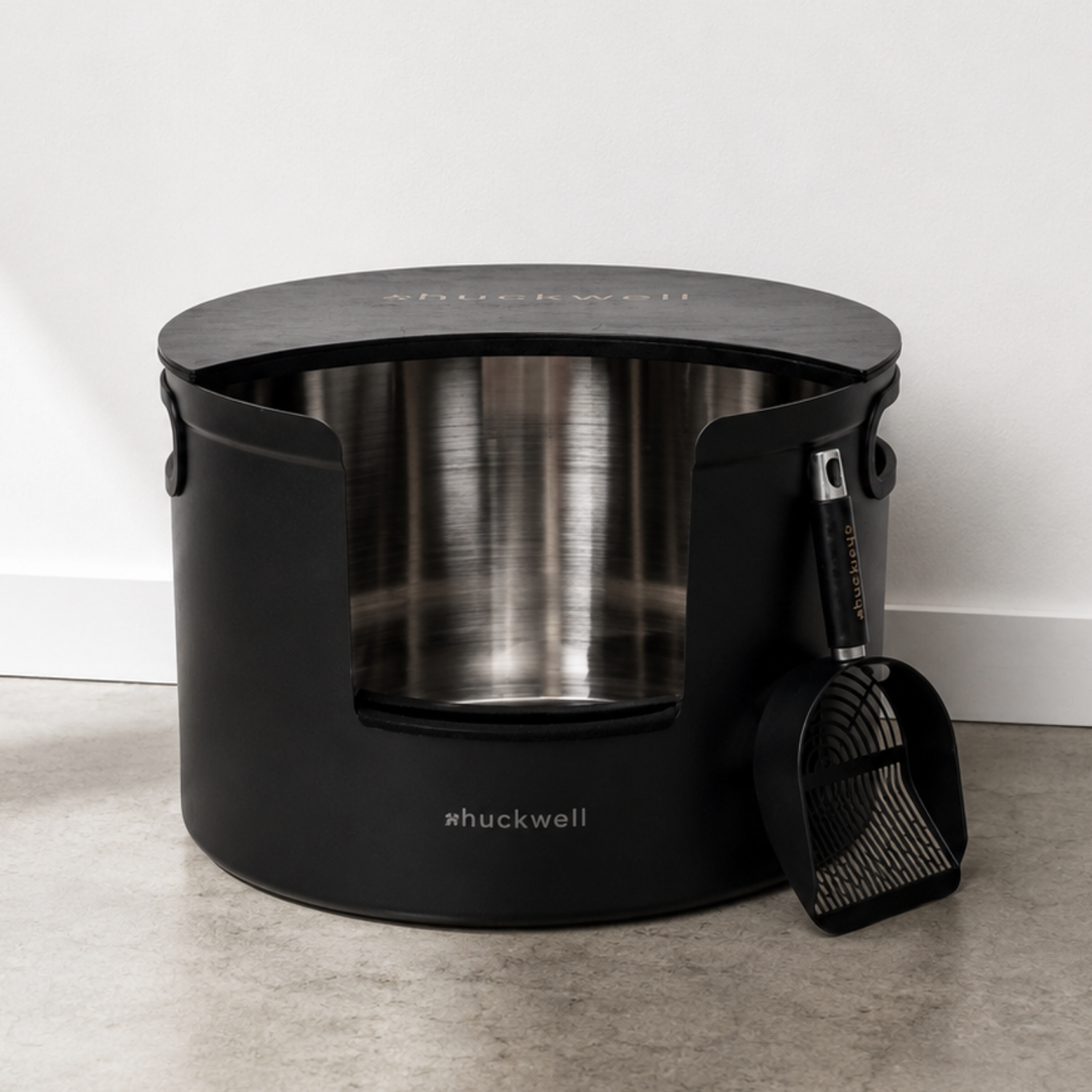
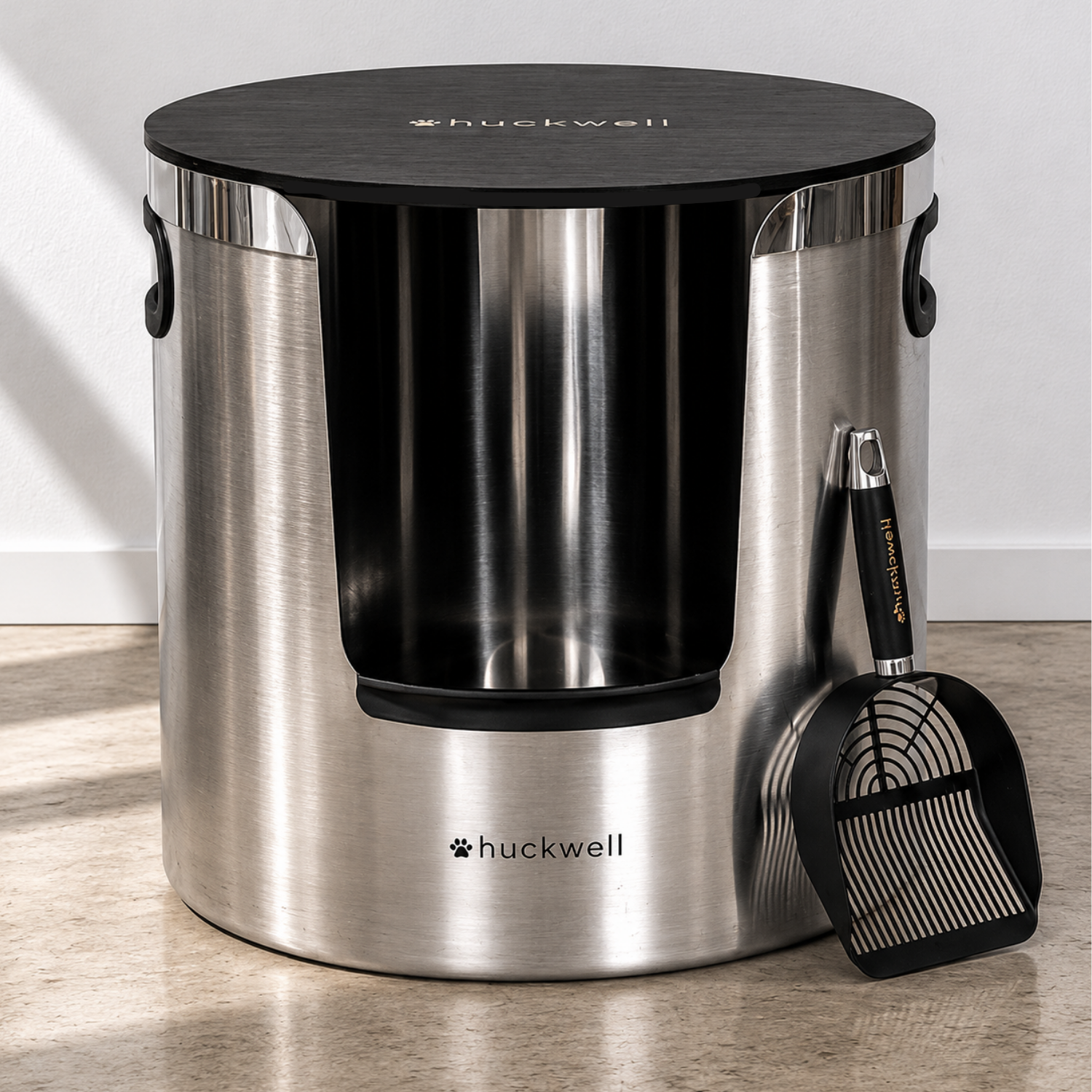
The Huckwell Halo XL at 23.6 inches diameter accommodates even large breeds comfortably and gives multiple cats adequate turning and positioning space when boxes are shared. The Huckwell Halo Classic at 18 inches suits most average-sized cats. Not sure which fits your cats? Use our Compare Sizes page to find the right fit.
Why Material Matters More in Multi-Cat Homes
Single-cat households can get away with a plastic litter box longer than multi-cat households. More cats means the plastic surface deteriorates faster.
Every time a cat digs in a plastic litter box, microscopic scratches accumulate across the surface. Those scratches trap urine, bacteria, and ammonia compounds. A single cat may take six to twelve months to contaminate a plastic box thoroughly. Two or three cats can achieve the same contamination in weeks.
Once a plastic box is contaminated, cleaning maintains the smell rather than eliminating it. The odor source is embedded inside the material, not sitting on the surface. No amount of scrubbing removes what has already penetrated the plastic.
304-grade stainless steel is non-porous. It does not scratch under normal use, does not absorb odor, and does not harbor bacteria in the same way. A multi-cat household running 304 stainless steel boxes wipes the surface clean rather than just reducing what is embedded. The difference in odor between a contaminated plastic box and a properly cleaned stainless box is not subtle. It is significant.
This is also why we use 304-grade specifically rather than the 201-grade stainless steel found in most competing stainless boxes. Under heavy multi-cat use involving repeated ammonia exposure, 201-grade degrades faster and begins to behave more like plastic over time. Read the full breakdown of why 304 beats 201.
The Round Design Advantage in Multi-Cat Homes
Rectangular litter boxes have corners. In a multi-cat household, corners become odor traps and waste accumulation points that are difficult to clean thoroughly and that cats avoid over time.
A round litter box eliminates corners entirely. Waste distributes more evenly across a continuous curved surface, cleaning is faster and more complete, and there are no dead zones for contamination to build up.
The round shape also matters for cat behavior. Cats naturally move in circular patterns when investigating, digging, and covering. A round interior accommodates that movement without forcing the cat to navigate corners, which is particularly important when multiple cats are using the same box and the litter distribution is less predictable.
Why the round design matters for your cat's health and comfort
Odor Control in Multi-Cat Homes: What Actually Works
Multi-cat odor is a compounding problem. More cats means more ammonia, more bacterial load, and faster litter saturation. Most odor control strategies treat the symptom rather than the cause.
What doesn't work long term: Scented litters, deodorizer sprays, and activated charcoal filters mask odor temporarily but don't address the bacterial contamination building up in the box material. Many cats also find heavy scents aversive, which can cause avoidance behavior.
What actually works:
Daily scooping is the baseline. In a multi-cat household, once daily is the minimum. Twice daily is significantly better if your schedule allows.
Complete litter changes more frequently. Multi-cat use saturates litter faster. Depending on how many cats you have, full litter changes every 10 to 14 days rather than monthly make a measurable difference.
Non-porous box material. A 304 stainless steel box that can be genuinely cleaned rather than just surface-wiped stops the compounding contamination cycle that makes multi-cat odor so persistent.
Adequate box quantity and placement. A box that is being used too frequently by too many cats without scooping will smell regardless of what it's made from. The N+1 rule combined with daily scooping keeps each individual box at a manageable level of use.
For a deeper dive into why litter boxes smell and how material drives it, read Why Does My Cat's Litter Box Smell Even After Cleaning?
Managing Territorial Stress Around the Litter Box
In multi-cat households, litter box problems are often behavioral rather than material. Box guarding is a real phenomenon. A dominant cat may position themselves near the litter box area and deter less confident cats from using it, particularly if boxes are clustered together.
Signs this is happening in your home include a cat using the box very quickly and leaving without covering, a cat eliminating just outside the box rather than inside, or a cat that seems hesitant to approach the box when another cat is nearby.
The practical fixes are straightforward. More boxes in more locations. At least one box that cannot be monitored or guarded from a single vantage point. Box placement that gives every cat an escape route rather than a dead-end corner.
If territorial issues are significant, consulting with a feline behavior specialist is worth considering. The AAFP has resources for finding a certified feline behavior consultant.
What to Look for in a Litter Box for Multiple Cats: Quick Reference
Size: Minimum 1.5x the body length of your largest cat. The Halo XL at 23.6 inches suits most multi-cat households including large breeds.
Material: 304-grade stainless steel. Non-porous, scratch resistant, genuinely cleanable under heavy use.
Shape: Round or no-corner design. Eliminates waste accumulation zones and cleans faster.
Wall height: Standard walls suit most cats. If any cat in your household sprays high or digs aggressively, the Halo Extra Tall with 16-inch walls prevents mess from escaping the box.
Quantity: N+1. One per cat plus one extra, placed in separate locations.
Frequently Asked Questions
What is the best litter box for two cats?
Two cats need at least three boxes sized for the larger of the two cats. Each box should provide at least 18 to 21 inches of interior space for an average adult cat, more for large breeds. A non-porous material like 304-grade stainless steel handles the increased use without developing embedded odor. The Halo XL works well for two-cat households where at least one cat is medium to large.
Can two cats share one litter box?
Technically yes, but it is not recommended. Shared boxes reach saturation faster, create territorial stress, and result in more cleaning for you. The AAHA-AAFP N+1 rule recommends three boxes for two cats to prevent resource competition and keep each box at a manageable level of use.
How often should you clean a litter box with multiple cats?
Daily scooping is the minimum for a multi-cat household. Twice daily is significantly better. Full litter changes should happen every 10 to 14 days rather than monthly when multiple cats are using the same boxes. A non-porous box material makes each cleaning more effective because you are removing contamination from the surface rather than just redistributing embedded odor.
Why does my litter box smell so bad with multiple cats?
More cats means faster contamination of the box material, particularly with plastic litter boxes. The surface develops embedded bacteria and uric acid that cleaning cannot fully remove. The odor compounds over time even with regular cleaning. Switching to a non-porous material like 304-grade stainless steel and following the N+1 box quantity rule addresses both the material and the usage load problems simultaneously.
Do cats prefer a certain type of litter box?
Research consistently shows cats prefer boxes that are large enough to turn and position comfortably, clean, and unscented. Most cats do not prefer covered boxes despite their popularity among owners. In multi-cat households, open or low-hood designs are preferable because they give cats clear sightlines and escape routes, reducing territorial stress around box access.
How do I stop my cats from fighting over the litter box?
Increase the number of boxes to at least N+1 and place them in different locations, not clustered together. Make sure each location offers a clear escape route so a subordinate cat cannot be cornered while using the box. If guarding behavior persists, a certified feline behavior consultant can help identify the specific dynamic and appropriate intervention.
For more on litter box sizing, read our Litter Box Size Guide. For a full breakdown of how 304-grade stainless steel performs under heavy use, read 304 vs 201 Stainless Steel: What's the Difference. And for tips on managing odor specifically in multi-cat homes, read Multi-Cat Homes: How to Prevent Odor and Keep Every Cat Happy.