How Big Should a Litter Box Be? What the Veterinary Guidelines Actually Say
If you've ever shopped for a litter box and felt like the options at your local pet store all looked basically the same, there's a reason. Most commercial litter boxes are sized for retail shelf space, not for cats.
According to the 2021 American Animal Hospital Association and American Association of Feline Practitioners (AAHA-AAFP) Feline Life Stage Guidelines, a litter box should be at least 1.5 times the length of your cat, measured from nose to base of tail. The guidelines go on to acknowledge what most cat owners eventually figure out for themselves: most manufactured boxes are not large enough.
That isn't a brand opinion. It's the official veterinary standard, published in the Journal of Feline Medicine and Surgery and the Journal of the American Animal Hospital Association, authored by a task force of feline medicine experts.
Here's what the guidance actually says, why it matters, and how Halo was designed to meet it.
The 1.5x Rule: How Big Should a Litter Box Actually Be?
The math is straightforward.
Measure your cat from the tip of the nose to the base of the tail. Multiply by 1.5. That number is the minimum interior length of litter box your cat needs.
- A 10-inch cat needs at least 15 inches of interior space
- A 12-inch cat needs at least 18 inches
- A 14-inch cat (common for larger breeds) needs at least 21 inches
- A 16-inch cat (Maine Coons, Norwegian Forest Cats) needs at least 24 inches
For context, most plastic litter boxes sold in pet stores are 14 to 16 inches long. That doesn't meet the minimum for an average 10 to 12-pound house cat. For a large breed, those boxes fall well short.
The AAHA-AAFP guidelines even note that owners often have to repurpose household items like under-bed storage containers to give cats appropriate room, because the commercial pet supply market hasn't caught up to the veterinary standard.
Why Size Matters More Than You Might Think
This isn't only about cat comfort. Inadequate litter box size is one of the most common environmental causes of feline house-soiling, which is in turn a leading behavioral reason cats are surrendered to shelters.
The CatFriendly resource maintained by the AAFP for cat owners is direct about this: the design and management of the litter box are critical for encouraging acceptable toileting habits. When a cat starts eliminating outside the box, the AAFP recommends evaluating the litter box itself before assuming a behavior problem.
What typically goes wrong with an undersized box:
- The cat can't turn comfortably without their tail or head touching the wall
- The cat can't fully cover waste, which clean-by-nature cats find aversive
- The cat develops avoidance behavior, which can become a learned habit that's hard to reverse
Cats don't urinate outside the box out of spite. They do it because something about the box isn't working for them. Size is one of the easiest factors to get right.
If your cat has suddenly stopped using the litter box, the AAFP also notes that medical issues like feline idiopathic cystitis, urinary tract infections, kidney disease, and arthritis can present this way. A veterinary exam should always be the first step. But once medical causes are ruled out, box size and box setup are the next places to look.
The N+1 Rule for Multi-Cat Households
The AAHA-AAFP guidelines also include a specific recommendation for households with more than one cat: one litter box per cat, plus one extra. This is often called the N+1 rule.
- 1 cat = 2 litter boxes
- 2 cats = 3 litter boxes
- 3 cats = 4 litter boxes
- 4 cats = 5 litter boxes
The guidelines also recommend placing those boxes in different locations rather than side by side. Cats often view adjacent boxes as one shared resource, which defeats the purpose of having multiple boxes. In multi-story homes, that usually means at least one box per floor.
When boxes are too few or too small in a multi-cat household, dominant cats may block access, and less confident cats may eliminate elsewhere. Adequate sizing combined with the N+1 rule reduces this conflict significantly.
Wall Height: The Dimension Most Owners Overlook
Most size conversations focus on the length and width of the box. Wall height is the dimension that gets less attention, and the one that varies most by cat.
The AAHA-AAFP guidelines note that wall height should match the life stage and physical needs of the cat. For kittens and senior cats, walls that are too high can become a barrier to entry, leading to accidents and avoidance. For adult cats that kick litter aggressively or urinate standing up, walls that are too low result in litter scatter and high spray on surrounding walls.
A four-inch wall is appropriate for some cats. A 16-inch wall is closer to ideal for cats that spray or dig aggressively. The right wall height depends on the specific cat, which is why the same household sometimes needs more than one style of litter box.
How Halo Was Designed Against These Guidelines
Halo wasn't designed to fit on a pet store shelf. It was designed against the veterinary guidance, working backward from what cats actually need.
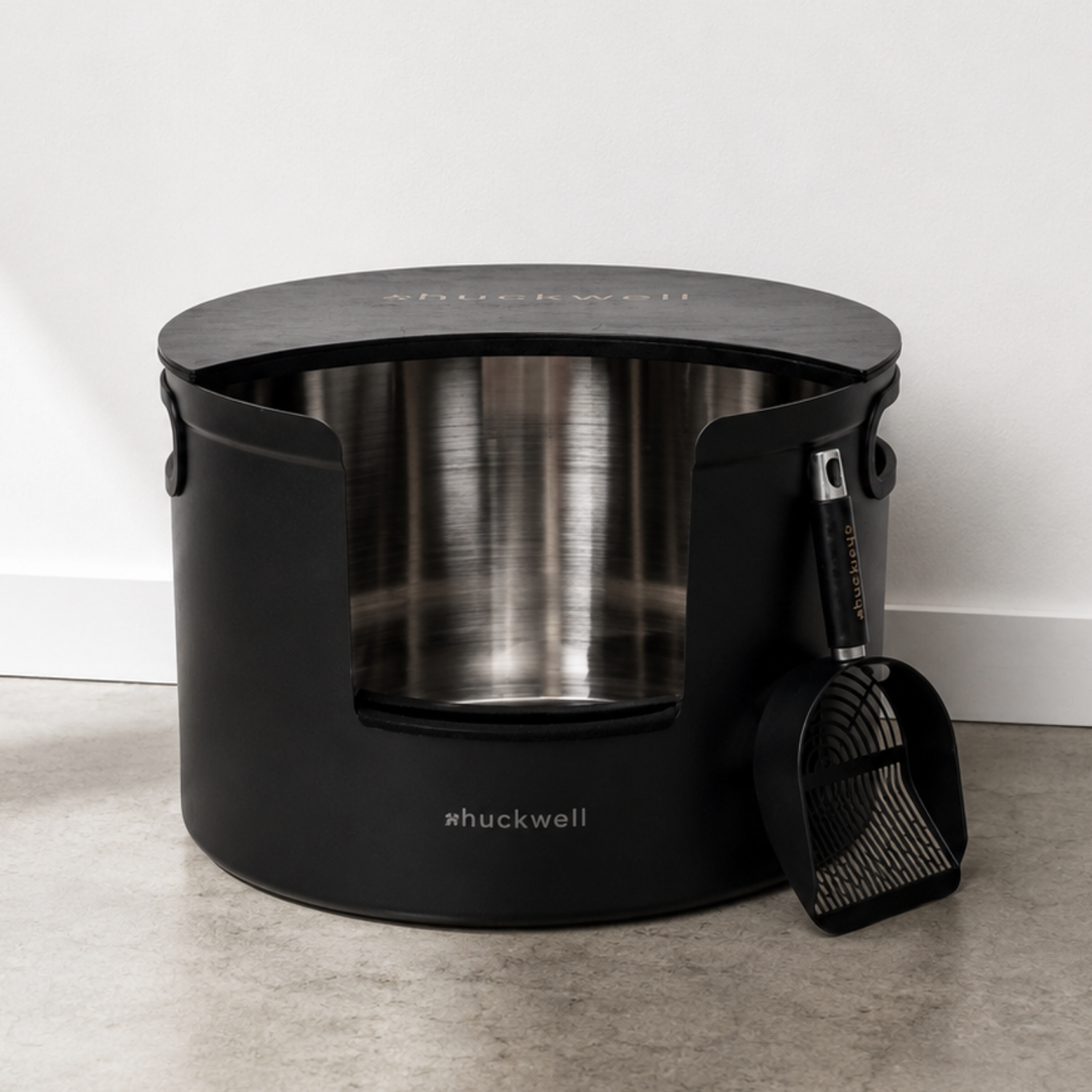
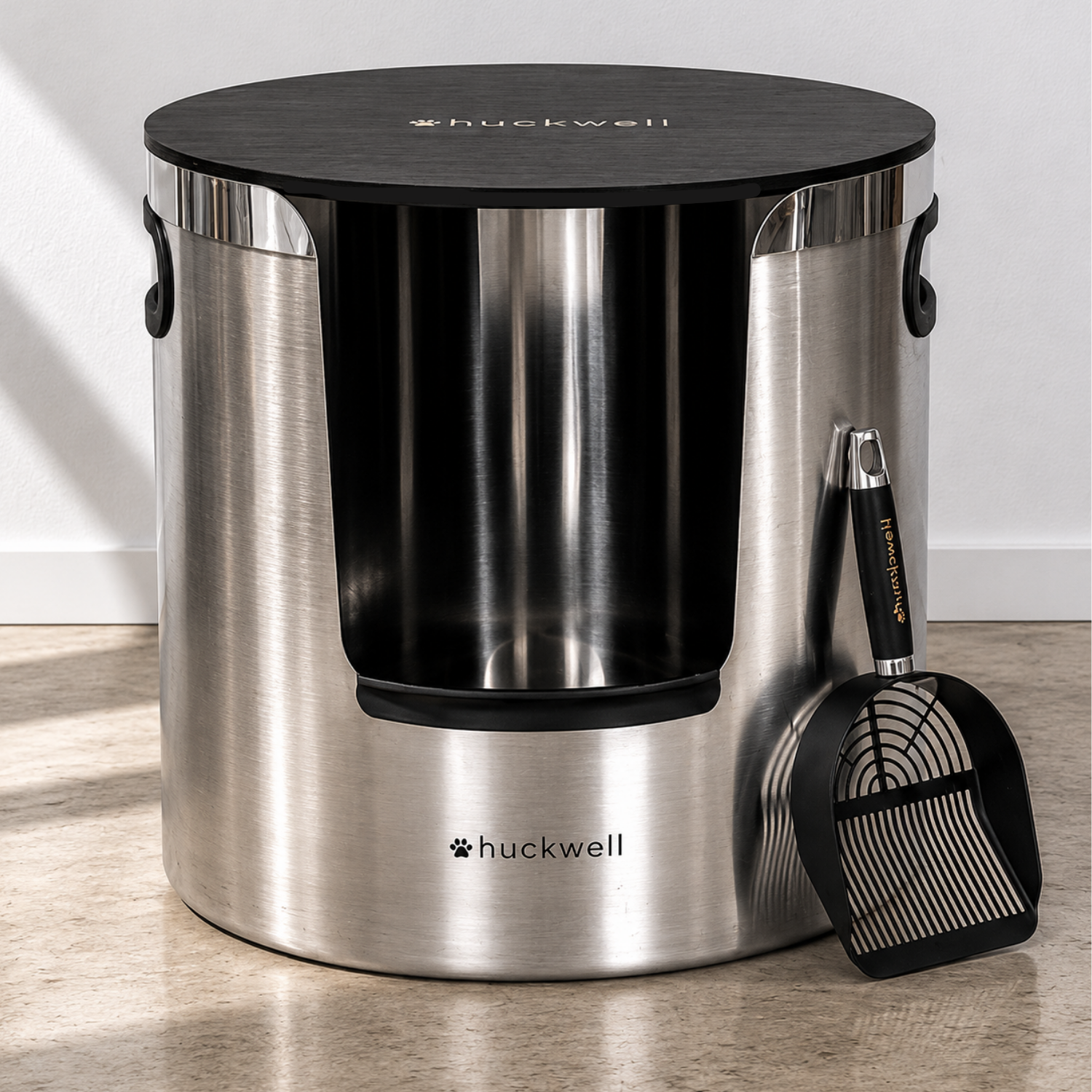
Halo Classic has an 18-inch interior diameter. That meets the 1.5x rule for cats up to 12 inches long, which covers most average-sized adult cats. The circular shape also adds usable turning space that rectangular boxes lose to corners. A 12-inch cat in a Halo Classic has room to turn, dig, and cover waste without their body touching the wall.
Halo XL has a 23-inch interior diameter. That meets the 1.5x rule for cats up to roughly 15 inches long, which covers most adult Maine Coons, Norwegian Forest Cats, Ragdolls, Siberians, and Savannahs. It also gives multi-cat households more usable space when boxes are shared.
Halo Extra Tall matches the Classic 18-inch diameter and adds a 16-inch wall height. Same compact footprint as the Classic, but the taller walls contain litter scatter and protect against high spraying. Built specifically for cats that aggressively dig or urinate standing up.
The circular design isn't aesthetic alone. Cats naturally move in circles when investigating, digging, and covering. Rectangular boxes force a cat to navigate corners that aren't natural to their movement, and those same corners trap waste and odor in ways a continuous curved interior doesn't.
A Note on the Material
Size is one half of the equation. The material is the other half, because a properly sized box still fails if it doesn't stay clean over time.
Plastic litter boxes develop microscopic scratches with regular use. Those scratches trap urine residue, bacteria, and ammonia compounds. Once embedded, they can't be fully cleaned out, which is why older plastic boxes retain odor even after thorough washing. Cats, whose sense of smell is far more sensitive than ours, often start avoiding boxes that smell clean to us but still smell of waste to them.
Halo is built from 304-grade stainless steel, the same material used in commercial kitchens and surgical instruments. It's non-porous, which means it doesn't develop the same scratches or trap residue. A wipe-down restores the surface to clean, not just clean-looking. You can read more about why we chose 304 grade specifically here.
The Takeaway
Veterinary guidelines on litter box size are clear, specific, and largely ignored by the mainstream pet supply industry. Most boxes on store shelves don't meet the minimum AAHA-AAFP recommendation for an average-sized cat, much less for the larger breeds that are increasingly popular in American homes.
That's the gap Halo was designed to close.
- Halo Classic at 18 inches accommodates most adult cats above the veterinary minimum
- Halo XL at 23 inches accommodates large breeds and multi-cat households
- Halo Extra Tall matches the Classic interior with added wall height for cats whose specific behaviors require it
If you're not sure which Halo fits your cat, the rule from the AAHA-AAFP guidelines is the easiest place to start. Measure nose to base of tail, multiply by 1.5, and pick a box at least that size. Then add wall height based on how your cat actually uses the box.
References
- American Animal Hospital Association and American Association of Feline Practitioners. (2021). 2021 AAHA/AAFP Feline Life Stage Guidelines: General Litter Box Considerations. Retrieved from aaha.org
- American Association of Feline Practitioners. Not Using the Litter Box. CatFriendly.com
- Quimby, J., Gowland, S., Carney, H. C., DePorter, T., Plummer, P., & Westropp, J. (2021). 2021 AAHA/AAFP Feline Life Stage Guidelines. Journal of Feline Medicine and Surgery, 23(3), 211–233.