Why Does My Cat's Litter Box Smell Even After Cleaning?
The short answer: If your litter box smells even after cleaning, the odor is not sitting on the surface. It has penetrated into the material itself. This is a problem specific to porous materials like plastic, and no amount of cleaning fixes it because the source of the smell is inside the box, not on it. The only permanent solution is switching to a non-porous material like 304-grade stainless steel.
You scoop every day. You scrub it weekly. You try different litters, different sprays, different deodorizers. And still, there is that smell.
If this sounds familiar, you are not doing anything wrong. The problem is not your cleaning routine. The problem is your litter box.
Here is what is actually happening and why switching boxes is the only thing that will truly fix it.
Why Plastic Litter Boxes Always End Up Smelling
When a plastic litter box is new, its surface is relatively smooth and easy to wipe clean. Within weeks of use, that changes.
Every time your cat digs, scratches, and covers in a plastic box, they are creating microscopic scratches across the entire surface. You cannot see most of these scratches with the naked eye but they are there, and they accumulate with every single use.
Those scratches become home to two things that cause persistent litter box odor:
Bacteria. Cat waste contains high concentrations of bacteria that embed in surface scratches and multiply. Scratched plastic can harbor up to 100,000 bacteria per square centimeter. Wiping the surface removes surface bacteria but leaves behind what is embedded in the scratches.
Ammonia and uric acid. Cat urine contains ammonia and uric acid crystals that penetrate porous surfaces and bond at a molecular level. Uric acid in particular is notoriously resistant to standard cleaning products. It is not water-soluble, which means soap and water do not break it down. Even enzymatic cleaners struggle to reach uric acid that has penetrated deep into a scratched plastic surface.
The result is a box that smells within minutes of cleaning because the source of the odor is not the waste you just removed. It is the accumulated contamination inside the material itself.
Why Cleaning More Often Does Not Solve It
Daily scooping and weekly deep cleaning are good habits but they cannot solve a material problem. Once a plastic litter box has developed embedded bacteria and uric acid contamination, cleaning maintains the situation rather than improving it.
This is why so many cat owners find themselves in a cycle of increasingly frequent cleaning with diminishing returns. The box is not getting dirtier faster. The embedded contamination is just becoming more established over time.
The only way to "fix" a contaminated plastic litter box is to replace it. And then the cycle starts again.
The Role of Litter Type
Litter choice affects how quickly odor builds up but does not solve the underlying material problem.
Clumping litters do a better job of containing urine before it spreads across the box surface, which slows contamination. Crystal litters absorb odor effectively when fresh but reach saturation relatively quickly. Natural litters vary significantly in their odor control properties.
No litter prevents the gradual contamination of a porous surface entirely. Litter manages the odor between cleans. The material of the box determines whether the box can ever be truly clean.
What a Non-Porous Surface Changes
304-grade stainless steel is non-porous. This single property changes everything about how a litter box performs over time.
Without microscopic pores and scratches for bacteria and uric acid to penetrate, contamination stays on the surface where it can be completely removed with normal cleaning. A stainless steel litter box that smells before cleaning will not smell after cleaning, because the source of the odor is genuinely gone rather than just reduced.
This is not a marginal improvement. Cat owners who switch from plastic to 304-grade stainless steel typically describe the difference as dramatic. Not "a bit less smell" but "it actually does not smell anymore."
Learn more about how 304-grade stainless steel compares to plastic
Other Reasons a Litter Box Might Smell
Material is the most common cause of persistent litter box odor but it is not the only one. Here are a few others worth ruling out:
The box is too small for your cat. When a cat cannot position themselves properly, urine is more likely to hit the walls and accumulate in corners rather than landing in the litter. High sides and adequate interior space reduce this significantly.
The litter depth is too shallow. Most cats need at least 3 to 4 inches of litter to cover waste effectively. Shallow litter leads to waste sitting on the box surface rather than being absorbed and covered.
You have multiple cats sharing one box. A single litter box serving multiple cats reaches saturation faster than most people realize. The one box per cat plus one extra rule exists for a reason.
The location creates air circulation problems. Litter boxes tucked into small enclosed spaces trap odor. Wherever possible, place boxes in areas with some airflow.
The lid is trapping odor. Covered litter boxes keep smell contained initially but if not cleaned frequently enough, the enclosed space concentrates odor significantly. A covered box that is not cleaned daily will often smell worse than an open box.
The Permanent Fix
If you have tried everything and your litter box still smells, the answer is almost certainly the material.
Switch to a 304-grade stainless steel litter box and the embedded contamination problem disappears because the material does not allow contamination to embed in the first place. Couple that with daily scooping and your litter box maintenance goes from an ongoing battle to a simple two-minute daily task.
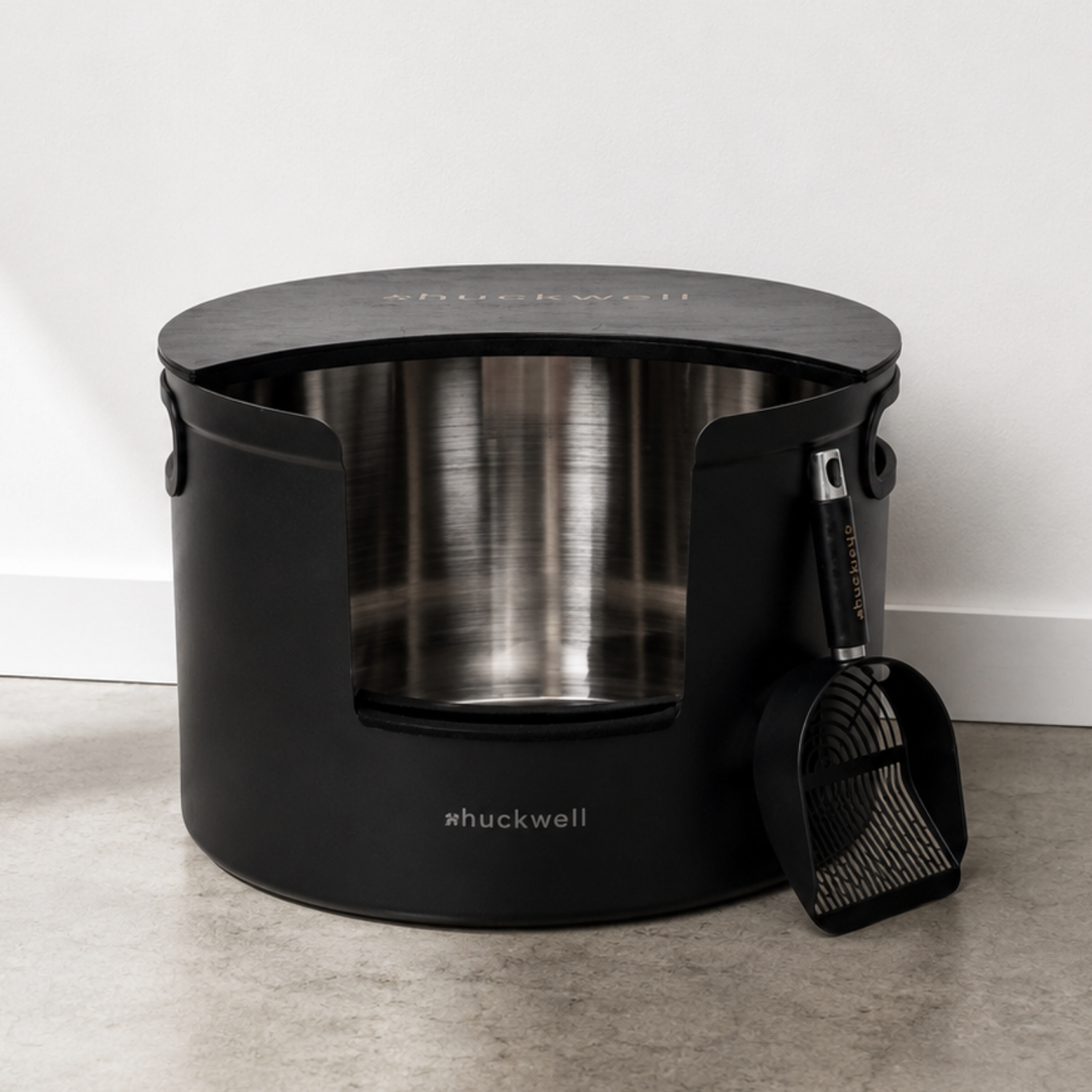
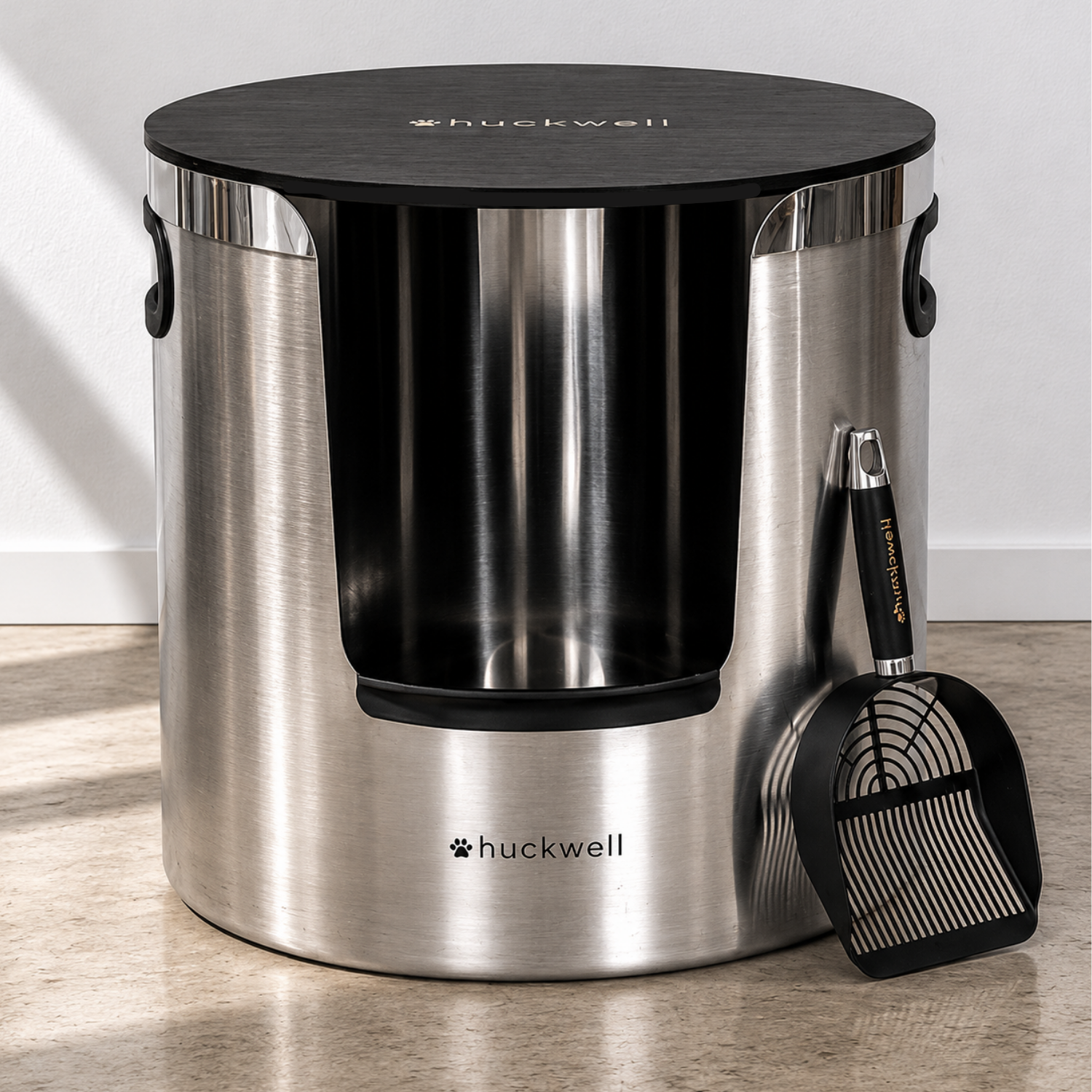
The Huckwell Halo is built from certified 304-grade stainless steel throughout. Its round interior has no corners for waste to collect, its high sides reduce scatter and wall contamination, and its non-porous surface wipes completely clean every time.
Shop the Halo Stainless Steel Litter Box
Frequently Asked Questions
Why does my litter box smell even though I clean it every day?
The odor is embedded inside the material, not sitting on the surface. Plastic litter boxes develop microscopic scratches with use, and bacteria and uric acid from cat waste penetrate those scratches and cannot be removed by cleaning. Daily scooping prevents new waste buildup but cannot remove contamination that is already inside the material.
Can I get rid of the smell in a plastic litter box permanently?
No. Once a plastic litter box has developed embedded contamination, the only solution is to replace it. Enzymatic cleaners can reduce the smell temporarily but cannot fully reach uric acid that has bonded deep within a scratched plastic surface. This is why most experts recommend replacing plastic litter boxes every 6 to 12 months.
What is the best litter box for odor control?
A 304-grade stainless steel litter box provides the best long-term odor control because its non-porous surface does not allow bacteria or uric acid to penetrate. It can be genuinely cleaned rather than just surface-cleaned, which means the odor source is completely removed rather than just reduced.
Does the type of litter affect how much the box smells?
Yes, but only to a degree. Clumping litters do a better job of containing urine before it spreads across the box surface. Crystal litters absorb odor effectively when fresh. However, no litter prevents the gradual contamination of a porous surface. Litter manages odor between cleans. The box material determines whether the box can ever truly be clean.
How often should I replace a plastic litter box?
Most veterinarians and feline behavior experts recommend replacing plastic litter boxes every 6 to 12 months, or sooner if visible scratching or staining is present. A 304-grade stainless steel box does not need replacing on this schedule because its surface does not degrade with normal use.
Why does my cat's litter box smell like ammonia even after cleaning?
Ammonia in cat urine penetrates porous surfaces like plastic and bonds within the material. Standard cleaning products do not break down embedded ammonia effectively. Switching to a non-porous surface like 304-grade stainless steel prevents ammonia from penetrating in the first place, solving the problem at its source rather than managing the symptoms.
Cat essentials, built to human standards.